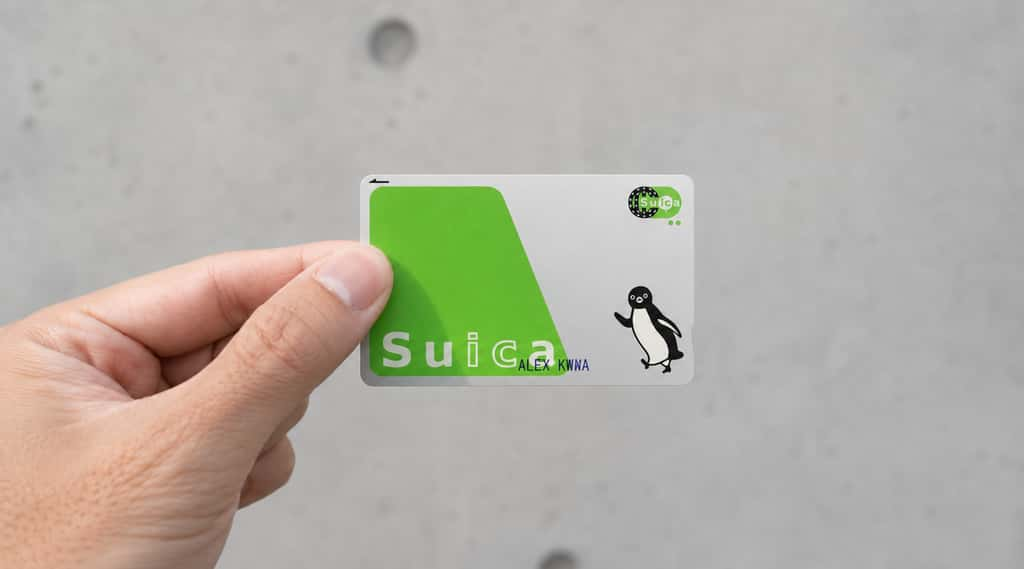
Updated: November 2026
A Welcome Suica, the tourist card, costs only the ¥1,000 to ¥10,000 (about US$6–63) you load onto it: JR East charges no deposit, so all of it is fare money. A regular Suica’s price includes a refundable ¥500 deposit. The maximum balance is ¥20,000 (about US$127). The real decisions are which version to carry, and how to top up without stranding money on a card you can’t refund.
Best for most travellers: if you have an iPhone, put Suica on your phone and top it up by card in Apple Wallet. Without one, buy a physical Welcome Suica at Narita or Haneda with ¥2,000–3,000 on it, then top up in small cash amounts. Skip the regular Suica unless you'll be back in Japan within a few years.
What matters before you buy
- The card is free; the "price" is the balance. JR East sells Welcome Suica with ¥1,000 to ¥10,000 loaded and no deposit. Klook's pre-booked pick-up version showed as sold out when we checked on 22 November 2026, so plan to buy it at an airport machine or counter.
- A physical Suica only takes cash. JR East says plainly that Suica and Welcome Suica cannot be topped up with a credit card. A phone Suica tops up from a card in Apple Wallet. That one difference is why iPhone users should go mobile: no hunting for an ATM when the gate beeps.
- Unused Welcome Suica money is gone. The card lasts 28 days including the purchase date, and JR East gives no refunds "regardless of the validity period status or remaining balance". The ¥20,000 cap is never the problem; overloading is. Top up little and often, and spend down in the last two days.
- Your bank card now works on the subway, but not on JR. Tokyo Metro's Tap to Ride service accepts contactless credit and debit cards across 11 Kanto railway operators, including Toei Subway, Keio, Odakyu and Tokyu. JR East, which runs the Yamanote Line, isn't on that list. Suica is still the one tap that covers JR and the subway alike; keep your bank card as the backup.
- Suica works in Osaka, but not on the way there. You can tap and top up in Kansai. You can't ride from the Tokyo area into another IC area on one tap, so Tokyo to Osaka still needs a Shinkansen ticket.
Quick answer
| Question | Answer (JR East, checked 21 November 2026) |
|---|---|
| Welcome Suica price | ¥1,000–10,000 of stored value, no card fee, no deposit |
| Maximum balance | ¥20,000 (about US$127) |
| Valid for | Welcome Suica: 28 days incl. purchase date; Welcome Suica Mobile: 180 days |
| Refund of leftover balance | Welcome Suica: none; regular Suica: balance minus ¥220 fee, plus the ¥500 deposit |
| Top up a physical card | Cash only, at station machines or Seven Bank ATMs |
| Top up a phone Suica | Card in Apple Wallet |
| Works in Osaka and Kyoto? | Yes, within each IC area |
| Pays for Shinkansen or limited express? | Not on its own; you need the separate ticket |
USD conversions use about ¥158 per US$1 (mid-November 2026); they are approximate and exchange rates can change.
We rechecked JR East’s Suica, Welcome Suica and Welcome Suica Mobile pages on 21 November 2026. The one factor that separates the options is how you top up: JR East says physical Suica and Welcome Suica cards take cash only, while a phone Suica tops up from a card in Apple Wallet or the Welcome Suica Mobile app.
Which Suica should you get?
For most visitors, the choice is phone versus Welcome Suica card, and the phone wins if it's an iPhone. The regular Suica only makes sense for repeat visitors.
| Option | Best for | The catch |
|---|---|---|
| Suica on iPhone (Apple Wallet or the Welcome Suica Mobile app) | iPhone users | Some countries block setting up or adding money before you arrive in Japan |
| Welcome Suica card | Android users, children, anyone who wants a card | Cash top-ups; leftover balance lost after 28 days |
| Regular Suica card | Returning visitors | ¥500 deposit, ¥220 refund fee, and refunds only at JR East stations |
Phone Suica. JR East's Welcome Suica Mobile app is iPhone-only (Apple Pay devices, age 13 and up) and stays valid for 180 days. It can also book Shinkansen and Narita Express seats and buy Green Car upgrades. The balance is non-refundable when it expires. Have a physical card or cash as backup in case your bank card is declined for top-ups.
Welcome Suica card. Sold at Narita Terminal 1 and Terminal 2·3 stations, Haneda Terminal 3, and JR East Travel Service Centers at Tokyo, Shinjuku, Shibuya, Ikebukuro, Ueno, Yokohama and Sendai, plus Japan Rail Café Tokyo and the Takanawa Gateway Travel Service Center, one per person in principle. Keep the reference paper you get with it; that's where the validity date is printed, not on the card.
Regular Suica. Its price includes a refundable ¥500 deposit, stays valid until ten years of non-use, and can be returned. On a ¥1,000 balance JR East refunds ¥1,280. That's only worth the trouble if you'll reuse the card.
How much should you put on Suica for one or two weeks?
Load ¥2,000–3,000 to start and top up as you go; never load the whole trip. Tokyo Metro's IC fares run from ¥178 to ¥324 a ride (adult, 2026 fare table). Our planning estimate for a city sightseeing day of four to six train or subway rides is ¥1,000–1,500 (about US$6–10). That's an estimate, not an official figure; a day trip to Kamakura or Yokohama costs more.
| Trip | Transport estimate | How to load it |
|---|---|---|
| 1 week | about ¥7,000–10,000 (US$45–65) | Start with ¥3,000; add ¥2,000–3,000 when the balance drops below ¥1,000 |
| 2 weeks | about ¥14,000–20,000 (US$90–130) | Same rhythm; switch to ¥1,000 top-ups in the last three days |
Two weeks of fares can reach the ¥20,000 cap, which is another reason to top up rather than preload. Convenience-store snacks and drinks come on top of these figures.
On a phone, top up whenever the balance gets low, so the leftover risk is small. On a Welcome Suica card, your last top-up should be ¥1,000, then spend what's left on a drink or snack before the airport.
How to top up Suica (including in Osaka)
Physical cards take Japanese yen cash at station machines and Seven Bank ATMs; phone Suica tops up in Apple Wallet anywhere. JR East lists ticket machines and fare adjustment machines that carry the nationwide mutual-use logo, in steps from ¥500 to ¥10,000, plus Seven Bank ATMs in 7-Eleven stores.
Yes, you can add value to Suica in Osaka. The JR Group says compatible machines in each mutual-use area accept top-ups, and JR East's instructions point to any ticket or fare adjustment machine carrying the nationwide mutual-use logo, which includes machines in Kansai. It's still cash only. We couldn't find an official statement that every Kansai convenience store will top up a Suica, so use a station machine.
If your balance is too low at the exit gate, the gate stops you. Use the fare adjustment machine inside the gate to add cash, then tap again.
Where Suica works, and where it doesn't
Suica covers local trains, subways, buses and shops in Tokyo, Osaka, Kyoto and the other mutual-use areas; it doesn't cover travel between those areas or the express supplements.
- Osaka and Kyoto: use it on trains, subways and buses that show the ICOCA or mutual-use logo, and at shops with those logos. Shops in PiTaPa areas don't accept it.
- Between areas: JR East says you "cannot use them to travel between each area". Tokyo to Sendai or Osaka needs a ticket, not a tap.
- Shinkansen and limited expresses: Suica covers only the basic fare. Super express, express and Green Car rides need a separate ticket. Our Shinkansen ticket guide covers how Suica fits with Tokyo–Kyoto–Osaka tickets.
- Day trips from Tokyo: for Kamakura, Hakone or Nikko, our guides compare a guided tour with doing it yourself by train.
- Subway-heavy days: if you'll ride Tokyo Metro and Toei many times a day, compare the Tokyo Subway Ticket. You'll still want Suica for JR lines.
Buy at the airport or book on Klook?
Buy it at the airport. Klook’s pre-booked Welcome Suica pick-up (about US$13.79 for ¥1,500 preloaded when we checked on 15 November 2026) showed as sold out on 22 November 2026. Even when it’s available it isn’t a discount: JR East’s machines sell the card at face value, so the pre-booked version only buys you a fixed pick-up.
Common Suica mistakes
- Loading ¥10,000 on a Welcome Suica in week three. Whatever is left after day 28 is lost.
- Expecting a credit-card top-up at the machine. Physical cards are cash only; carry a few thousand yen.
- Tapping in at Tokyo and expecting to tap out in Osaka. Cross-area rides need a ticket.
- Throwing away the Welcome Suica reference paper. It's your proof of the validity date. Ticket machines can reprint it.
- Buying an adult card for a child. Child Welcome Suicas charge child fares, need the child's passport at purchase, and work until the 31 March after the child's 12th birthday.
Final verdict
Get a Suica; the only real question is where it lives. Choose the phone version if you have an iPhone, because card top-ups remove the cash problem. Choose a Welcome Suica card for Android phones and children, and keep its balance low. Choose a regular Suica only if you'll return. Either way, top up ¥2,000–3,000 at a time.
Arriving at Narita? Our Narita Airport Limousine Bus guide and Skyliner guide cover the ride into town. A phone Suica needs data from the moment you land: see our Japan SIM card comparison.
FAQ
Can two people share one Suica?
Not on trains. The gate records one entry and one exit per card, so each traveller needs their own Suica. Sharing works only for shop purchases.
What happens if I leave Japan with money on a regular Suica?
It stays on the card. A regular Suica becomes invalid only after ten years without use, so the balance is there for your next trip. To cash it out instead, return it at a JR East station: you get the balance minus ¥220, plus the ¥500 deposit.
Does Welcome Suica work on buses?
Yes. JR East's instructions are to tap the reader when you get on and off; there's no ticket to buy. It works on buses in the Tokyo area and the other mutual-use areas.
How we checked
We rewrote this guide in November 2026 and checked every rule against official sources on 15 November 2026, then rechecked the JR East pages on 21 November 2026. The daily budget is our planning estimate built from Tokyo Metro's 2026 IC fares, not an official figure. We couldn't read JR East's post-March 2026 fare table, so this guide quotes no JR per-ride fare. Klook's price was read the same day and changes.
Sources: JR East, Suica page (deposit, ¥20,000 limit, cash-only top-ups, refunds, area rules); JR East, Welcome Suica purchasing and using page (prices, sales points, 28-day validity, no refunds); JR East, Welcome Suica Mobile page (180 days, iPhone only, country restrictions, information current as of March 2026); JR Group, nationwide IC mutual-use page (top-ups in each area); JR West, how to use ICOCA; Tokyo Metro, Tap to Ride Service and 2026 fare guide; Apple Support, adding a transit card to Apple Wallet in Japan; Klook Welcome Suica listing.
Written by

Former KLOOK Recommender System Expert
Built the systems that decided which products ranked first for users in KLOOK. That experience taught me that rankings just optimize clicks and conversions for OTA — not necessarily what truly fits each traveler. Today, I write evidence-based verdicts using my 4 year experience on product: whether they're worth it, who they suit, and when you're better off skipping them.