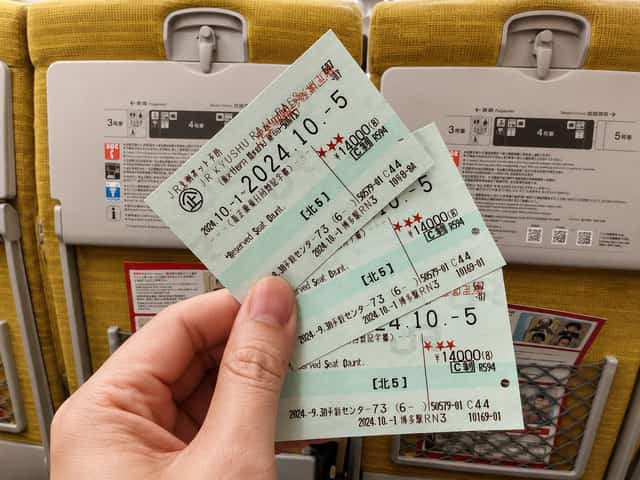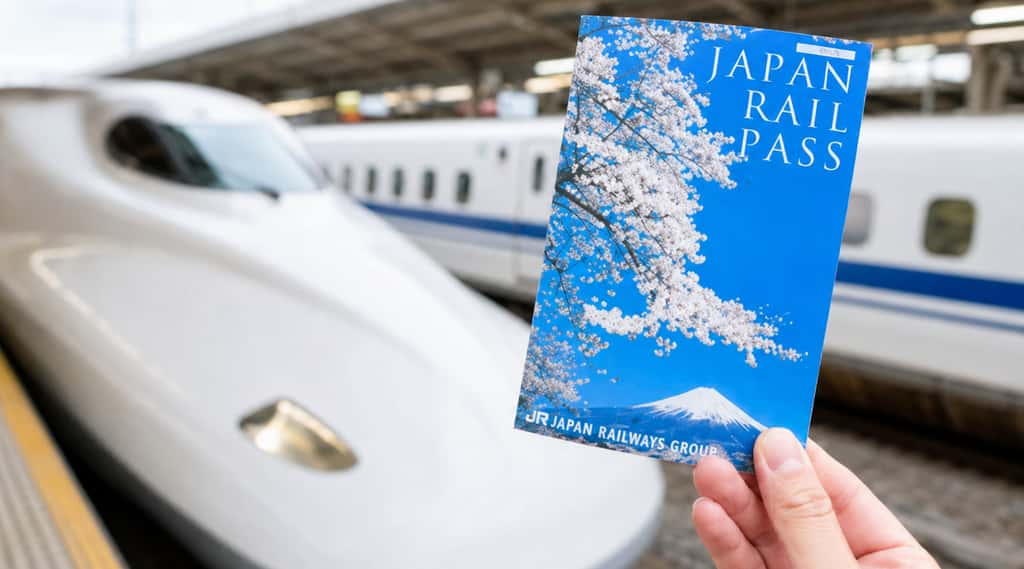
The Japan Rail Pass is no longer an automatic buy for a typical Tokyo–Kyoto–Osaka trip. At the current official Web price of ¥50,000 (about US$313.62) for a 7-day Ordinary Pass, you generally need several expensive long-distance JR journeys within the same 7-day period before the nationwide pass starts to make financial sense.
The pass becomes much more useful for itineraries that continue beyond the standard Golden Route—for example, trips combining Tokyo, Kansai and Hiroshima, Kyushu, Tohoku or Hokkaido.
Best for most travellers: Do not buy a nationwide JR Pass until you have priced your long-distance journeys individually. For a simple Tokyo–Kyoto–Osaka itinerary, separate Shinkansen tickets are usually the safer choice. Buy the nationwide pass when your itinerary contains enough expensive JR travel to exceed the pass price.
USD conversions use the August 2026 rate of roughly ¥159 per US$1 and are approximate. Yen prices were rechecked on the official JAPAN RAIL PASS site on 22 November 2026.
Japan Rail Pass Prices: Quick Answer
Current official prices are:
| Pass | Ordinary | Green Car | Best for |
|---|---|---|---|
| 7 days | US$313.62 (¥50,000) | US$439.07 (¥70,000) | Intensive one-week cross-country travel |
| 14 days | US$501.79 (¥80,000) | US$689.96 (¥110,000) | Longer multi-region itineraries |
| 21 days | US$627.24 (¥100,000) | US$878.13 (¥140,000) | Long trips covering several regions |
Children are roughly half price. JR defines the child category as ages 6–11, subject to its specific age-at-purchase rules.
These are the official Web purchase prices (JAPAN RAIL PASS Reservation), checked on japanrailpass.net on 22 November 2026. Since 1 October 2026, an Exchange Order from an overseas JR-designated agency, which is how Klook sells the pass, costs ¥53,000, ¥84,000 or ¥105,000 for an Ordinary 7, 14 or 21-day pass. That ¥3,000–¥5,000 gap (¥4,000–¥7,000 for Green) is now the factor that separates the two ways to buy.
Important: JR Pass Exchange Order Prices Rose on October 1, 2026
Travellers buying through an overseas JR-designated agency should pay particular attention to the purchase date.
Since October 1, 2026, these Exchange Order prices apply:
| Pass | Until Sep 30 | From Oct 1 | Increase |
|---|---|---|---|
| Ordinary 7-Day | ¥50,000 | ¥53,000 | ¥3,000 |
| Ordinary 14-Day | ¥80,000 | ¥84,000 | ¥4,000 |
| Ordinary 21-Day | ¥100,000 | ¥105,000 | ¥5,000 |
| Green 7-Day | ¥70,000 | ¥74,000 | ¥4,000 |
| Green 14-Day | ¥110,000 | ¥116,000 | ¥6,000 |
| Green 21-Day | ¥140,000 | ¥147,000 | ¥7,000 |
At the August 2026 exchange rate used here, the new Ordinary Exchange Order prices are approximately:
- 7 days: US$332.44
- 14 days: US$526.88
- 21 days: US$658.60
There is an important distinction: the increase applies to overseas-agency Exchange Orders. When we checked on 22 November 2026, the official Web-purchase table still listed ¥50,000, ¥80,000 and ¥100,000 for Ordinary passes. JR says these pre-October Web prices are available for a limited time and has not announced an end date.
That makes the official Web purchase route the cheaper way to buy while that limited-time Web pricing lasts. Prices are subject to change, so compare the live checkout before paying.
Is the Japan Rail Pass Worth It in 2026?
It is worth it for intensive long-distance JR travel. It is usually not worth buying for convenience alone.
The fundamental calculation is:
Cost of the JR Pass vs total cost of the JR journeys you would buy anyway.
A 7-day Ordinary Pass now costs ¥50,000. That means a few local JR rides in Tokyo, Kyoto or Osaka make almost no difference to the calculation. The value needs to come primarily from Shinkansen and limited-express travel.
The JR Pass is more likely to be worth it if:
- You take several long-distance Shinkansen trips within 7 days.
- Your itinerary covers three or more distant regions.
- You make expensive side trips rather than staying on Tokyo–Kyoto–Osaka only.
- You need frequent JR limited express trains.
- You value the flexibility of making additional covered trips after the pass has already paid for itself.
Skip it if:
- You mainly visit Tokyo, Kyoto and Osaka.
- You spend several days in each city without long-distance travel.
- Much of your transport uses Metro, private railway or buses.
- A regional JR pass covers your itinerary.
- You can buy discounted individual Shinkansen tickets instead.
Do not buy the nationwide pass solely because you are taking the Shinkansen.
7-Day vs 14-Day vs 21-Day JR Pass
7-Day Pass: Best for a Compressed Long-Distance Itinerary
The 7-day Ordinary Pass costs ¥50,000, about US$313.62.
This is the easiest nationwide pass to justify because you can concentrate expensive journeys inside one week.
Choose it if your route looks more like:
Tokyo → Kansai → Hiroshima → another distant region → return
rather than:
Tokyo → Kyoto → Osaka → Tokyo
The main trick is to activate it for the seven days containing your most expensive journeys rather than automatically starting it on your arrival day.
14-Day Pass: Much Higher Break-Even Point
The 14-day Ordinary Pass costs ¥80,000, about US$501.79.
The extra seven days cost ¥30,000.
Choose 14 days only when long-distance travel continues well beyond the first week. If your second week consists mainly of staying in Kyoto or Tokyo, buying a 7-day pass and paying separately for local transport may cost less.
21-Day Pass: Best Only for Serious Nationwide Travel
The 21-day Ordinary Pass costs ¥100,000, about US$627.24.
Interestingly, upgrading from 14 to 21 days costs only another ¥20,000.
So if you have already calculated that a 14-day pass works and you still have several expensive JR journeys in the third week, the 21-day version can be easier to justify than expected.
Best overall value: 7 days for a deliberately compressed rail itinerary.
Best for long trips: 21 days only when you genuinely continue travelling long distances throughout the third week.
What Does the Japan Rail Pass Cover?
The nationwide pass covers most JR Group railway services, including:
- Most Shinkansen
- JR limited express trains
- JR express trains
- JR rapid trains
- JR local trains
- Tokyo Monorail
- Eligible local JR Bus routes
- JR-West Miyajima Ferry
- Certain specifically permitted non-JR through sections
This includes useful urban JR lines such as Tokyo's Yamanote Line and Osaka's JR network.
However, local JR fares are relatively small compared with the price of the nationwide pass. They are a convenience benefit rather than the main financial reason to buy one.
Does the JR Pass Include Nozomi and Mizuho?
Not automatically.
The standard Japan Rail Pass does not include Nozomi or Mizuho trains on the Tokaido, Sanyo and Kyushu Shinkansen. Pass holders can instead ride covered services such as Hikari, Sakura, Kodama and Tsubame.
However, the old statement that JR Pass holders simply “cannot use Nozomi or Mizuho” is now incomplete.
You can use them by buying a separate [ONLY WITH JAPAN RAIL PASS] NOZOMI MIZUHO Ticket before boarding.
Current adult supplements include:
| Route | Nozomi/Mizuho supplement |
|---|---|
| Tokyo → Nagoya | about US$26.22 (¥4,180) |
| Tokyo → Kyoto | about US$31.11 (¥4,960) |
| Tokyo → Shin-Osaka | about US$31.11 (¥4,960) |
| Tokyo → Hiroshima | about US$40.77 (¥6,500) |
| Shin-Osaka → Hakata | about US$31.11 (¥4,960) |
The special ticket must be purchased for each relevant journey.
Is the Nozomi upgrade worth it?
Occasionally, yes. Repeatedly, usually no.
The main benefit is schedule flexibility and a faster journey. But if you repeatedly pay ¥4,960–¥6,500 supplements on top of an already expensive JR Pass, the pass's financial advantage shrinks quickly.
Use Hikari or Sakura when the timing works.
Buy a Nozomi/Mizuho supplement when the faster departure meaningfully improves your itinerary.
JR Pass vs Individual Shinkansen Tickets
Individual tickets are better for most simple itineraries.
A nationwide pass trades lower marginal cost per extra JR journey for a very high upfront price.
Individual tickets give you:
- No need to reach a break-even point.
- Access to Nozomi without a JR Pass supplement.
- More freedom to use different railway companies.
- No need to compress expensive journeys inside a 7-, 14- or 21-day pass window.
JR Central also offers online Shinkansen booking, QR boarding and discounted advance-purchase products through its online reservation system.
Choose the JR Pass when:
Your planned JR fares already approach or exceed the pass price.
Choose individual tickets when:
You have only one or two major intercity journeys.
For most first-time Tokyo–Kyoto–Osaka visitors, start by pricing individual tickets rather than automatically buying a JR Pass.
JR Pass vs Regional JR Pass
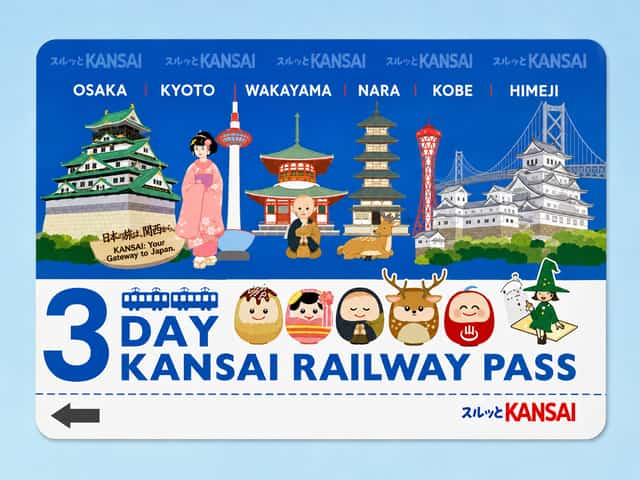
A regional pass is often the better value when your trip is concentrated in one part of Japan.
JR itself now explicitly directs travellers with shorter or area-specific itineraries toward limited-area passes.
Examples include passes for:
- Kansai
- Kansai Wide
- Kyushu
- Hokkaido
- Tohoku
- Tokyo and surrounding regions
Klook's current rail-pass marketplace also lists substantially cheaper regional products alongside the Whole Japan Pass.
Choose the nationwide JR Pass if:
Your trip crosses several JR regions.
Choose a regional pass if:
Most expensive rail journeys remain inside one region.
This is one of the most common ways travellers overpay for Japanese rail travel.
Official JR Website vs Klook: Where Should You Buy?
The official website currently offers the strongest functionality. Klook can still be useful if you specifically want an overseas Exchange Order and its checkout price is competitive.
Official JAPAN RAIL PASS Reservation
The official Web service lets eligible foreign tourists purchase using a passport and credit card. After purchase, you collect the Pass after arriving in Japan.
The major advantage is important:
Only customers who buy directly through the official Web service can reserve Shinkansen and limited-express seats online before collecting the actual Pass.
Current official Web price for a 7-day Ordinary Pass:
¥50,000, approximately US$313.62.
Klook
Klook currently sells the Whole Japan Pass using a physical Exchange Order delivered before the trip. Its live product page currently shows the pass from around US$315, with 700K+ bookings and about 29K reviews. Pricing can move with exchange rates and package configuration.
Klook states that:
- The Exchange Order is valid for 90 days from booking confirmation.
- If travel is more than three months away, issuance may be delayed until closer to departure.
- You exchange the physical order in Japan with your passport.
- Changes normally require cancelling and rebooking.
- Current cancellation terms retain a 10% cancellation fee.
Which is better?
| Purchase route | Best feature | Main catch |
|---|---|---|
| Official Web | Online seat reservations before Pass pickup | Must use JR's own booking system |
| Klook / overseas agent | Exchange Order delivered before trip | Physical voucher + weaker cancellation economics |
| Station counter | Do not rely on this | Current sales process is Web/overseas-agent based |
Best for most travellers buying a nationwide pass: Official Web purchase.
Check Klook when: its live exchange-rate pricing, delivery or other package benefits make it more attractive for you.
Can You Buy a JR Pass in Japan?
The old answer “No, JR Passes cannot be bought in Japan” is too simplistic.
The current official system provides an online purchase route, after which travellers collect the Pass at designated locations in Japan.
What you should not assume is that you can simply arrive at any JR station and buy a nationwide pass over the counter like a normal railway ticket.
For practical trip planning, use one of the supported purchase methods:
- Official JAPAN RAIL PASS Reservation
- An overseas JR-designated agent / OTA using an Exchange Order
Who Is Eligible for the Japan Rail Pass?
For most international travellers, eligibility requires being a foreign tourist entering Japan with Temporary Visitor status.
This point matters.
JR states that travellers using automated immigration gates may need to ask for the appropriate Temporary Visitor stamp or sticker because eligibility must be confirmed when the Pass is issued.
Foreign residents of Japan do not qualify simply because they hold a non-Japanese passport.
Japanese citizens living abroad can qualify only under separate conditions, including documentation requirements relating to long-term overseas residence. The official Web sales service is not available to Japanese nationals living abroad.
Ordinary vs Green Car: Is Green Worth It?
For most travellers, choose Ordinary.
Current 7-day pricing is:
- Ordinary: ¥50,000
- Green: ¥70,000
- Upgrade: ¥20,000, about US$125.45
Green Car gives access to premium Green seating where available, while an Ordinary Pass is limited to the eligible ordinary-car facilities.
Green Car is worth considering if:
- You will take many long Shinkansen journeys.
- More space and a quieter environment matter to you.
- You travel during busy periods and prefer premium seating.
- The ¥20,000+ upgrade is a small part of your trip budget.
Skip Green Car if:
- Your primary objective is saving money.
- Most journeys are short.
- You are already struggling to make the Ordinary Pass pay for itself.
Best value: Ordinary.
Are Seat Reservations Included?
Yes, eligible reserved seats are generally included with the appropriate JR Pass.
With the official Web purchase route, you can reserve eligible Shinkansen and limited-express seats online before collecting the Pass.
After pickup, reservations can also be handled using applicable ticket machines or JR offices.
Remember to cancel a reservation before departure if your plans change. JR's conditions specifically require reserved-seat cancellations to be processed before the booked train departs.
JR Pass Luggage Rules
A JR Pass does not remove Shinkansen luggage rules.
On the Tokaido–Sanyo–Kyushu Shinkansen, luggage with total dimensions exceeding 160 cm and up to 250 cm requires a reservation for a seat with an oversized baggage area.
There is no extra charge when the appropriate oversized-baggage seat is reserved.
If you board with applicable oversized baggage without the required reservation, the current baggage fee is ¥1,000, about US$6.27.
Baggage over 250 cm in combined dimensions cannot be taken onboard.
Important for JR Pass users
When reserving your Shinkansen seat, specifically request a seat with an oversized baggage area if your suitcase qualifies.
Do not assume that holding a Green Car Pass automatically reserves luggage space.
Does the JR Pass Cover Narita and Haneda Airport Trains?
It covers several useful airport connections.
The nationwide Pass covers eligible JR services and also specifically covers the Tokyo Monorail, useful for Haneda Airport.
JR services such as the Narita Express are also within the JR network subject to normal pass rules.
However, airport transfers alone make only a small contribution toward the ¥50,000 break-even point.
Do not buy a nationwide JR Pass primarily for airport transport.
Does the JR Pass Cover Subways?
No.
Tokyo Metro, Toei Subway, Osaka Metro and other non-JR subway networks are not included simply because you have a nationwide JR Pass.
JR also warns that when a covered JR train continues onto a private railway, you may need to pay separately for the non-JR section.
Examples of routes with private portions requiring extra fares include services toward:
- Kawaguchiko
- Tobu Nikko
- Kinugawa Onsen
- Izukyu-Shimoda
- Amanohashidate
- Tottori and Kurayoshi
This is why “unlimited JR travel” should not be interpreted as unlimited public transport throughout Japan.
Does the JR Pass Cover Buses and Ferries?
Some, not all.
The pass covers eligible local JR Bus routes, but JR express bus routes are excluded.
For ferries, the nationwide Pass currently covers the JR-West Miyajima Ferry. Travellers still need to pay the separate ¥100 Miyajima Visitor Tax.
The JR Kyushu ferry between Hakata and Busan is not included.
Refund Rules: Official vs Exchange Order
This is another reason purchase channel matters.
Official Web purchase
Before the Pass start date, eligible official Web purchases can generally be refunded through the official reservation service for a ¥560 handling fee per Pass, subject to the current conditions.
Overseas Exchange Order
Once an overseas Exchange Order has been exchanged for the actual Pass, JR's domestic refund rule charges 10% of the Pass sale price. Refund rules for an unexchanged Exchange Order depend on the original seller.
Klook currently also states a 10% cancellation deduction for its Exchange Order product.
After the Pass starts
Once use has started, JR does not extend or refund the Pass because of service suspensions, delays, natural disasters or itinerary changes.
That is important for travellers buying an expensive 14- or 21-day pass.
Common Japan Rail Pass Mistakes
1. Buying it for Tokyo–Kyoto–Osaka without doing the math
The current 7-day Pass costs ¥50,000.
A Golden Route itinerary is not automatically enough to justify it.
2. Believing every Shinkansen is free
Nozomi and Mizuho require a separate special ticket.
3. Paying Nozomi supplements repeatedly
Tokyo–Kyoto or Tokyo–Shin-Osaka costs another ¥4,960 each time with the JR Pass.
Several upgrades can destroy the Pass's savings.
4. Starting the 7-day Pass too early
If your first two days are only Tokyo sightseeing, do not necessarily activate the nationwide Pass immediately.
Concentrate the validity around your expensive intercity journeys.
5. Assuming all public transport is covered
Subways and most private railways are not included.
6. Buying nationwide when a regional pass is enough
Regional passes can cost dramatically less.
7. Ignoring oversized baggage reservations
Suitcases over 160 cm combined dimensions need the appropriate Shinkansen luggage-space reservation on affected routes.
8. Losing the physical Pass
JR's current conditions state that a lost or stolen Pass cannot be reissued.
9. Assuming Klook is automatically cheaper
At the time of this update, Klook's live Whole Japan listing is around US$315, while ¥50,000 converts to approximately US$313.62 at the current exchange rate.
Check both before purchasing.
10. Buying because 700K+ travellers booked it
Klook currently displays 700K+ bookings and around 29K reviews with a 4.8/5 rating. That shows broad usage, not that the Pass will save money on your itinerary.
Final Verdict: Should You Buy the Japan Rail Pass?
For most first-time visitors doing only Tokyo, Kyoto and Osaka, skip the nationwide JR Pass and buy individual tickets.
Buy the 7-Day Ordinary JR Pass when you can concentrate enough expensive long-distance JR travel into one week to exceed approximately ¥50,000 in individual fares.
Choose 14 days only when long-distance rail travel continues into the second week.
Choose 21 days when you are genuinely making a nationwide trip rather than simply staying in Japan for three weeks.
Choose Green Car for comfort, not savings.
And compare official Web purchase vs Klook/overseas-agent pricing carefully, particularly for purchases on or after October 1, 2026, when the overseas-agent Exchange Order price increase took effect.
Best for most travellers: Individual tickets or a regional JR pass Best nationwide option: 7-Day Ordinary Pass for a compressed multi-region trip Best purchase channel: Official JR Web service when its live price and conditions are preferable Best reason to use Klook: Competitive live price or Exchange Order delivery convenience—not booking count
FAQ
How much is the Japan Rail Pass in 2026?
Current official Web Ordinary prices are ¥50,000 for 7 days, ¥80,000 for 14 days and ¥100,000 for 21 days, approximately US$313.62, US$501.79 and US$627.24 at the exchange rate used for this update.
Did the Japan Rail Pass price rise in October 2026?
Yes, for overseas-agency Exchange Orders. Since October 1, 2026, Ordinary Exchange Orders cost ¥53,000, ¥84,000 and ¥105,000 for 7, 14 and 21 days. The official Web price was still ¥50,000, ¥80,000 and ¥100,000 when we checked on 22 November 2026.
Is the JR Pass worth it for Tokyo, Kyoto and Osaka?
Usually not by default at current prices. Price your individual Shinkansen journeys first. The nationwide 7-day pass now costs ¥50,000.
Can I use the JR Pass on the Nozomi?
Yes, but not for free. You must buy a separate JR Pass-exclusive Nozomi/Mizuho ticket. Tokyo–Kyoto and Tokyo–Shin-Osaka currently cost an additional ¥4,960 per journey.
Does the JR Pass cover all Shinkansen?
No. Most JR Shinkansen are covered, but Nozomi and Mizuho require the additional special ticket.
Can I buy a Japan Rail Pass online?
Yes. Eligible travellers can purchase directly through the official JAPAN RAIL PASS Reservation service.
Do I still need an Exchange Order?
Not if you buy directly through the official Web service. Overseas agents such as Klook currently use the Exchange Order route, while official Web purchasers collect their Pass in Japan using their purchase details and passport.
Is Klook cheaper than the official JR Pass website?
Not necessarily. Klook currently lists the Whole Japan Pass from around US$315, while the official ¥50,000 price converts to roughly US$313.62 at the exchange rate used here. Prices and exchange rates can change.
Can I reserve Shinkansen seats before arriving in Japan?
Yes, if you purchase through the official JR Web service. JR says this pre-pickup online reservation function is exclusive to official Web purchasers.
Does the JR Pass include the Yamanote Line?
Yes. It covers eligible JR local trains, including JR urban rail services.
Does the JR Pass cover Tokyo Metro?
No. Tokyo Metro and other private/subway operators are outside the nationwide JR network.
Does the JR Pass cover the Tokyo Monorail to Haneda?
Yes. Tokyo Monorail is specifically included in the nationwide Pass validity.
Does the JR Pass cover the Miyajima ferry?
The JR-West Miyajima Ferry is included, but the separate ¥100 Miyajima Visitor Tax still applies.
Is Green Car JR Pass worth it?
Usually only for comfort. The 7-day upgrade costs ¥20,000, about US$125.45, so Ordinary is the better-value choice for most tourists.
Do children need a JR Pass?
Children aged 6–11 have child-price JR Passes. Younger children can travel under separate JR child/infant rules, especially if they need their own reserved seat.
What happens if I lose my JR Pass?
It cannot be reissued if lost or stolen, according to the current JR conditions.
Written by

Former KLOOK Recommender System Expert
Built the systems that decided which products ranked first for users in KLOOK. That experience taught me that rankings just optimize clicks and conversions for OTA — not necessarily what truly fits each traveler. Today, I write evidence-based verdicts using my 4 year experience on product: whether they're worth it, who they suit, and when you're better off skipping them.