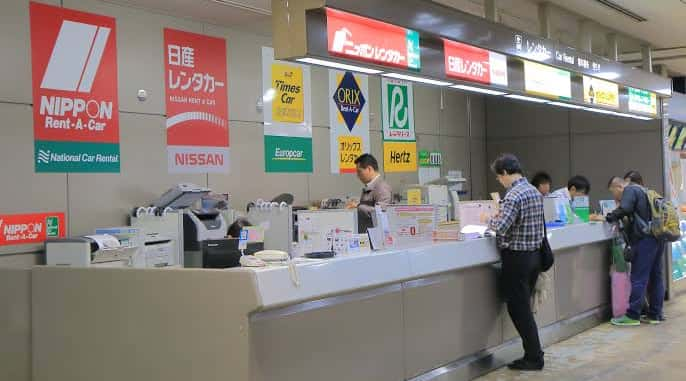
Renting a car in Japan is most useful in Okinawa, Hokkaido and rural areas where public transport is limited. For central Tokyo, Osaka and Kyoto, a rental car is usually less convenient because trains are extensive and urban parking can be difficult. Japan's official tourism organization specifically highlights Hokkaido and Okinawa as particularly suitable for driving.
Before booking, check your driving documents carefully. Japan does not accept every type of International Driving Permit (IDP), and arriving with the wrong permit can mean the rental company legally cannot give you the car.
Best for most travellers: Rent a compact self-drive car for Okinawa, Hokkaido or a rural road trip. For a Mt. Fuji day trip from Tokyo or a group that does not want to drive in Japan, book a private car charter with a driver instead.
Japan Car Rental: Quick Answer
| Option | Typical current cost | Best for | Main catch |
|---|---|---|---|
| Self-drive in Naha/Okinawa | from about US$26/day | Okinawa road trips | IDP/licence rules, fuel, parking |
| Self-drive in Sapporo | from about US$44/day | Hokkaido outside central Sapporo | Winter equipment may be essential |
| Airport rental | Varies | Starting a road trip immediately | Rental office may require a shuttle |
| City rental | Varies | Driving only part of your trip | Urban parking and traffic |
| Private car with driver | often US$280+ for full-day Tokyo-area charters | Families, groups, Mt. Fuji trips | Much more expensive than self-drive |
Klook was recently listing selected compact rentals from approximately US$26 per day in Naha and US$44 per day in Sapporo. These are dynamic starting prices rather than fixed rates and can change substantially with dates, vehicle class and season.
A current Klook Tokyo-region private charter package, for comparison, starts around US$288 for selected 10-hour packages.
Do You Need an International Driving Permit in Japan?
Usually yes — but it depends on where your driving licence was issued.
Japan recognizes International Driving Permits issued in accordance with the 1949 Geneva Convention on Road Traffic. An IDP issued under another convention, including the 1968 Vienna Convention, is not valid for driving in Japan.
Japan driving-document rules
| Your licence | What you generally need |
|---|---|
| Licence from a country issuing a Japan-valid 1949 Geneva IDP | Valid Geneva-format IDP + passport |
| Switzerland | Original licence + authorized Japanese translation |
| Germany | Original licence + authorized Japanese translation |
| France | Original licence + authorized Japanese translation |
| Belgium | Original licence + authorized Japanese translation |
| Monaco | Original licence + authorized Japanese translation |
| Taiwan | Original licence + authorized Japanese translation |
| Japanese licence | Valid Japanese driving licence |
The current National Police Agency and JAF information identifies Switzerland, Germany, France, Belgium, Monaco and Taiwan as the countries/region whose licence holders can use their original licence with an authorized Japanese translation.
Do not assume that simply having something called an “international driving licence” is enough.
Paper IDP vs digital IDP
Japan's official tourism guidance states that a booklet-style paper IDP is required. Card-style or smartphone-only international permits are not valid substitutes.
How long can you drive with an IDP?
The maximum driving period is generally the shorter of:
- the IDP's valid period; or
- one year from your entry into Japan.
Japan's National Police Agency confirms this one-year limitation.
Get an entry stamp if possible
Your entry date can matter when proving that your IDP is within Japan's permitted driving period.
JNTO advises travellers using automated immigration gates to obtain an entry stamp because the rental company or authorities may need evidence of the date you entered Japan.
What About a Japanese Translation of My Licence?
If your licence is from Switzerland, Germany, France, Belgium, Monaco or Taiwan, you can use an authorized Japanese translation instead of relying on a Geneva IDP route.
Do not assume that your own translation or a generic translation service will be accepted.
The National Police Agency lists authorized issuers, including relevant licensing authorities or embassies/consulates and JAF, with additional approved organizations for certain licences.
JAF currently handles its licence-translation applications online. For visitors using one of the six eligible foreign licences simply to drive temporarily in Japan, JAF's translation fee remains ¥6,000, or about US$38.
USD conversions in this guide are approximate, using roughly ¥159 per US$1 in August 2026; exchange rates can change.
What Do You Need to Pick Up a Rental Car?
For most international visitors, prepare:
- your valid driving document for Japan;
- your passport;
- your original domestic driving licence if required by the supplier;
- your booking voucher;
- a credit card in the main driver's name when required.
Klook's current car-rental terms state that the main driver may need to present a credit card with sufficient funds for a deposit or pre-authorization, and some suppliers require the driver's licence to have been held for one or two years.
However, a credit card is not a universal Japanese legal requirement. For example, Toyota Rent a Car accepts cash for some vehicle classes under specified conditions, although its online booking system uses card payment and certain classes require a credit card.
The practical rule is simple:
Check the exact supplier terms before booking, especially the deposit, accepted card types and minimum licence-holding period.
Airport Pick-Up vs City Pick-Up
Choose airport pick-up when…
Airport pick-up makes the most sense when your road trip starts as soon as you land — particularly in Okinawa or Hokkaido.
It avoids travelling into the city with luggage only to return to a rental office later.
The main catch: “airport pick-up” may involve a shuttle
Do not assume your rental car will be waiting immediately outside the terminal.
Toyota, for example, states that some airport-area rental shops provide transportation between airport terminals and the rental location.
The same setup is common in Okinawa: current Klook Naha rental listings include suppliers offering airport transfer between Naha Airport and an off-airport rental location.
Allow extra time for:
- immigration and baggage collection;
- locating the rental shuttle;
- transferring to the rental office;
- document verification;
- the rental agreement;
- vehicle inspection.
Do not schedule a tightly timed attraction immediately after landing.
Choose city pick-up when…
City pick-up is better when you are spending the first part of your trip in Tokyo, Osaka or another major city and only need a car later.
For example, spending three days in Tokyo and renting only when leaving for a rural destination avoids paying for a vehicle and parking while it is largely unnecessary.
JNTO notes that parking can be difficult in urban centres, while cars are especially useful in places such as Hokkaido and Okinawa.
Where Is Renting a Car in Japan Actually Worth It?
Okinawa: one of the strongest use cases
Recommendation: Rent a car.
Outside central Naha, many Okinawa attractions are substantially easier to combine by car. Current Klook Naha listings start from around US$26 per day for selected compact cars.
A compact model is usually the most practical choice for couples and small groups because it is easier to maneuver and park.
Hokkaido: excellent for regional road trips
Recommendation: Rent a car outside central Sapporo, especially for multi-stop regional itineraries.
Klook currently lists selected Sapporo compact rentals from around US$44 per day.
Winter is different. Snow and ice make appropriate winter equipment a major booking requirement, not an optional afterthought. Nippon Rent-A-Car specifically instructs drivers using snowy or icy roads to have winter tires.
Tokyo: usually skip the rental car
Recommendation: Do not rent a car solely for central Tokyo sightseeing.
Parking, tolls and traffic generally remove much of the convenience, while the city has an extensive public transport network. JNTO specifically warns that parking can be difficult in urban centres.
A rental becomes more useful once your itinerary leaves the urban rail network.
Osaka and Kyoto: usually use trains first
For standard sightseeing around Osaka and central Kyoto, public transport is normally the easier option.
Consider a car when your trip extends into rural Kansai or you have several passengers and luggage with destinations that are awkward by train.
Self-Drive vs Car with Driver: Which Is Better?
| Self-drive rental | Private car with driver | |
|---|---|---|
| Cost | Lower | Higher |
| IDP / valid Japanese driving document | Required | Not required for passengers |
| Driving responsibility | You | Driver |
| Fuel | Usually extra | Depends on package |
| Tolls | Usually extra | Depends on package |
| Parking | Usually extra | Depends on package |
| Flexibility | Excellent | Excellent within booked hours |
| Best for | Multi-day road trips | Day trips and groups |
Best for multi-day travel: self-drive
Self-drive normally provides much better value when you need a car for several days.
It is especially attractive in Okinawa and Hokkaido, where a rental car can become your main form of transportation rather than simply an expensive sightseeing transfer.
Best for Mt. Fuji day trips: private car with driver
For a group leaving Tokyo for Mt. Fuji, Hakone or Nikko, a private charter removes the need to obtain Japanese-valid driving documents or navigate unfamiliar roads yourself.
Klook currently offers Tokyo private charters with English-speaking drivers in 5- or 10-hour formats for groups of different sizes. The listed package includes fuel, expressway tolls, intercity fees, bridge/tunnel fees and the first child seat, while attraction admission is excluded.
One closely related current Tokyo charter package starts from approximately US$288.
Best for Okinawa without driving: private charter
Klook currently lists an Okinawa private charter with 5-, 8- and 10-hour options and vehicles for groups of up to nine passengers. It shows 3K+ bookings, 256 reviews and a 4.9/5 rating.
But do not assume it is “all inclusive.”
For this particular Okinawa package, fuel and insurance are included, while tolls and parking may cost extra.
That contrasts with the Tokyo/Mt. Fuji package above, where tolls are included. This is why you should compare package inclusions rather than just the headline charter price.
Japan Rental Car Insurance: What Actually Matters?
Do not treat the word “insurance” as meaning you have zero financial exposure.
Major Japanese rental companies generally include a basic insurance/compensation package, but deductibles and a separate Non-Operation Charge (NOC) may still apply.
CDW vs NOC
These are different.
Collision Damage Waiver (CDW) generally reduces or waives specified deductibles for damage covered under the rental agreement.
NOC — Non-Operation Charge compensates the rental company when a damaged vehicle cannot be rented while it is being repaired or cleaned.
At Nippon Rent-A-Car, for example, the current CDW costs roughly ¥1,100–¥2,200 per day (about US$7–14) depending on vehicle class. Its NOC is normally ¥20,000 if the vehicle can be returned to the scheduled office or ¥50,000 in other specified situations.
That is approximately US$126 or US$314 at current exchange rates.
Nippon's separate Extra Coverage Option currently costs ¥440 — about US$3 — per day and can waive qualifying NOC charges.
Toyota uses a similar structure: basic insurance includes deductibles, while its additional protection packages can remove deductibles and, depending on the option, NOC liability.
Should you buy extra rental-car coverage?
For most international visitors, paying close attention to deductible and NOC protection is worth it.
The important question is not simply:
“Does this rental include insurance?”
Ask instead:
“What could I still have to pay after an accident?”
When booking through Klook, check the insurance section of the specific booking or voucher because coverage varies by rental operator.
Do You Need an ETC Card?
An ETC card is highly useful if your trip uses Japanese expressways regularly, but it is not always mandatory.
ETC automatically pays tolls as you pass through compatible toll gates.
Toyota currently charges ¥550 per rental — about US$3.50 — for an ETC card, with actual expressway tolls paid separately when the vehicle is returned.
Some expressway entrances are ETC-only, which makes having a rental ETC card even more useful on a road trip.
Do not confuse:
ETC unit in the car ≠ ETC card included.
Toyota passenger cars generally have ETC equipment, but the card itself is a separate rental option.
Do You Need Snow Tires in Japan?
If you may encounter snow or ice, book proper winter equipment in advance.
Nippon Rent-A-Car warns that winter conditions are possible across much of Japan from November through April and specifically requires appropriate winter tires when driving on snowy or icy roads.
Toyota currently lists winter tires at approximately:
- ¥2,200/day — about US$14 — for many passenger cars and vans
- ¥3,300/day — about US$21 — for many wagons/SUVs
Some regions and periods instead include winter tires as standard seasonal equipment.
Reserve them early for winter trips rather than assuming they will be available at pick-up.
Fuel, Mileage and One-Way Rentals
Fuel
Check your exact fuel policy.
Toyota normally requires the vehicle to be returned with a full tank; otherwise it calculates a fuel charge.
Do not assume every Klook supplier follows exactly the same policy.
Mileage
Mileage rules are supplier-specific.
Toyota currently states that its rentals have no mileage limit, but an aggregator booking with a different provider may use different terms.
One-way rental
One-way rental can save substantial backtracking, but it may cost extra.
Toyota allows eligible rentals to be returned to another branch, subject to route, vehicle and shop restrictions. Cross-prefecture returns can incur a one-way fee. It does not offer one-way rental between Hokkaido and Japan's other main islands or between Okinawa and other prefectures.
How to Book a Japan Rental Car
1. Verify your driving documents first
Do this before paying for the vehicle.
A cheap rental is useless if the supplier refuses pickup because your IDP is the wrong format.
2. Search by your real pick-up location
Compare:
- airport vs downtown;
- same-location vs one-way return;
- pick-up and return opening hours;
- shuttle requirements.
3. Choose the smallest car that comfortably fits everyone
Do not judge capacity only by the number of seats.
Four passengers plus four large suitcases may need a much larger vehicle than four passengers travelling with small bags.
4. Add the options you actually need
Check:
- ETC card;
- winter tires;
- child seat;
- additional drivers;
- insurance/CDW;
- NOC protection;
- one-way return.
5. Read cancellation and no-show terms
Do not assume every Klook rental has the same “free cancellation” policy.
Klook states that cancellation deadlines vary according to payment method and rental supplier. A booking can also be treated as a no-show when required documents, rental qualifications or sufficient deposit funds are missing.
What to Do at Pick-Up
Before leaving the rental location:
- Present all required original documents.
- Confirm every authorized driver is registered.
- Check the rental agreement and insurance excess.
- Confirm whether NOC is covered.
- Verify the fuel-return rule.
- Check ETC card status if requested.
- Confirm winter tires when relevant.
- Inspect the vehicle for existing damage.
Toyota and JNTO both advise customers to inspect the vehicle for existing scratches or dents before departure.
Common Japan Car Rental Mistakes
1. Buying the wrong type of IDP
A Vienna Convention permit is not automatically valid in Japan. Japan requires a qualifying Geneva Convention permit.
2. Assuming nationality determines the licence rule
What matters is the driving licence and permit issued to you, not simply the passport you travel with.
3. Assuming airport pickup means terminal pickup
Many airport rentals involve a shuttle to a nearby branch.
4. Renting a car for central Tokyo without a reason
Urban parking can be difficult, and a car often adds expense rather than convenience.
5. Assuming “insurance included” means zero liability
Deductibles and NOC can still remain unless additional protection covers them.
6. Confusing the ETC reader with an ETC card
The vehicle may contain an ETC unit while still requiring you to rent a separate ETC card.
7. Booking winter travel without confirming snow tires
Winter tires may need to be selected in advance and availability can be limited.
8. Assuming every private charter includes tolls and parking
Some do; some do not. The current Tokyo/Mt. Fuji Klook package includes tolls, while a current Okinawa charter lists tolls and parking as possible extra costs.
Final Verdict: Should You Rent a Car in Japan?
For most first-time visitors spending their entire trip in Tokyo, Kyoto and Osaka, no — you probably do not need a rental car.
For Okinawa, Hokkaido and rural road trips, yes — renting a car can significantly improve where you can go and how efficiently you can travel. JNTO specifically identifies Hokkaido and Okinawa as particularly accessible by car.
For a one-day Mt. Fuji, Hakone or regional sightseeing trip from Tokyo, consider a private car with driver instead. It costs considerably more than self-drive, but removes the driver's-document issue and can work well when the cost is shared by a family or group. Current Klook Tokyo charters offer customizable 5- and 10-hour services with English-speaking drivers.
Best self-drive choice: Okinawa or Hokkaido Best urban choice: Public transport Best no-driving day-trip choice: Private car charter Best budget strategy: Rent only for the days you actually leave the rail-friendly cities
FAQ
Can tourists rent a car in Japan?
Yes, provided the driver has documentation that is valid for driving in Japan and meets the rental company's conditions.
Can I drive in Japan with my normal foreign driving licence?
Usually not by itself. Most eligible visitors need a valid 1949 Geneva Convention IDP. Licence holders from Switzerland, Germany, France, Belgium, Monaco and Taiwan can instead use their original licence together with an authorized Japanese translation.
Does Japan accept a digital International Driving Permit?
No. JNTO states that Japan requires a booklet-style paper IDP; card and smartphone versions are not valid.
Does Japan accept a Vienna Convention IDP?
No. An IDP issued under the 1968 Vienna Convention is not valid simply because it is called an International Driving Permit.
How much does a rental car cost in Japan?
Prices vary heavily by region, date and vehicle. As current examples, Klook recently listed compact cars from about US$26/day in Naha and US$44/day in Sapporo.
Is airport car rental more expensive than city pickup?
Not necessarily. Compare the total price for your dates rather than assuming one is cheaper. Airport pickup can be more convenient, but you may need a shuttle between the terminal and rental branch.
Can I rent a car at Haneda, Narita, Kansai or New Chitose Airport?
Yes, airport-area rental options are widely available, but the exact collection process depends on the supplier and branch. Some airport-area branches provide terminal transfer services rather than vehicle collection directly at the terminal.
Do I need a credit card to rent a car in Japan?
Often, but not universally. Klook currently instructs renters to prepare a main-driver credit card for deposits, while companies such as Toyota permit cash payment for certain direct-rental vehicle classes under specific conditions.
Do Japanese rental cars include insurance?
Basic coverage is commonly included by major suppliers, but deductibles and Non-Operation Charges may remain. Check CDW and NOC protection separately.
Is an ETC card worth renting?
Yes if you expect to use expressways regularly. Toyota currently rents ETC cards for ¥550, about US$3.50, plus the actual toll charges.
Do I need snow tires in Hokkaido?
Yes when driving in snowy or icy conditions. Book them in advance; some Hokkaido winter rentals may already include them as seasonal equipment.
Can I return my rental car in another Japanese city?
Sometimes. One-way rental is available from major suppliers but depends on branch, vehicle and route, and additional fees can apply.
Is it better to rent a car or hire a driver in Japan?
Rent a car for multi-day road trips; hire a driver for expensive-but-convenient day trips or when nobody in the group wants to drive. A private driver is particularly useful for customizable Mt. Fuji/Hakone trips from Tokyo.
Do I need an IDP when booking a car with a driver?
No, not when you are only a passenger in a licensed private charter. The driving-document requirements apply to the person actually driving; current Klook charters provide the commercial vehicle and professional driver.
Written by

Former KLOOK Recommender System Expert
Built the systems that decided which products ranked first for users in KLOOK. That experience taught me that rankings just optimize clicks and conversions for OTA — not necessarily what truly fits each traveler. Today, I write evidence-based verdicts using my 4 year experience on product: whether they're worth it, who they suit, and when you're better off skipping them.