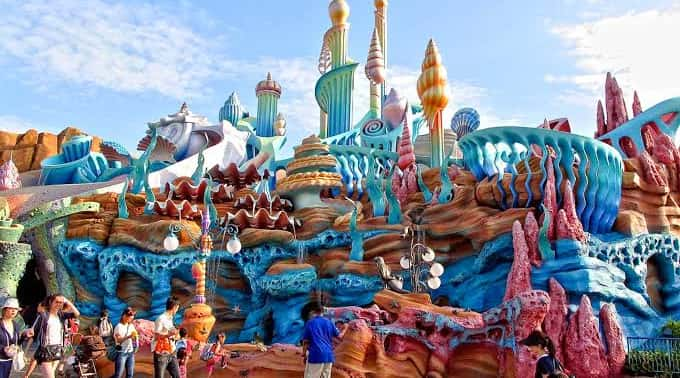
Tokyo Disney Resort has two separate theme parks, and for most international visitors the decision is straightforward:
Choose Tokyo DisneySea if you are an adult, couple, teenager or repeat Disney visitor with only one day. Choose Tokyo Disneyland if you want the classic castle-and-parade Disney experience or are travelling with younger children.
If you have two full days, do not overthink it: spend one day at each park.
The bigger 2026 decision is not simply Disneyland vs DisneySea. It is how much queue time you are willing to tolerate. Tokyo Disney tickets are relatively affordable by international theme-park standards, but the headline attractions can still generate long waits, and getting a good day often means using Disney Premier Access strategically rather than trying to save every yen.
Best for most first-time Japan visitors with one Disney day: Tokyo DisneySea. Best for younger families and classic Disney: Tokyo Disneyland. Best overall itinerary: One full day at each park. Best queue strategy: Buy Premier Access for only the attractions where the time saving matters most.
Tokyo Disneyland vs DisneySea: Quick Answer
| Tokyo Disneyland | Tokyo DisneySea | |
|---|---|---|
| Best for | Families, first Disney visit, classic Disney | Adults, couples, teens, repeat Disney visitors |
| Main icon | Cinderella Castle | Mount Prometheus |
| Biggest reason to visit | Beauty and the Beast + classic Disney atmosphere | Fantasy Springs + uniquely designed park |
| Thrill rides | Moderate | Better overall selection |
| Princess fans | Excellent | Excellent, especially Frozen and Rapunzel |
| Young children | Better | Good |
| Adults/couples | Good | Better |
| Parades | Stronger traditional parade experience | More harbor-based entertainment |
| Language-independent rides | Plenty | Plenty |
| Most distinctive from other Disney parks | Less | Much more |
| One-day first choice for most foreign adults | — | Winner |
Klook currently shows more than 6 million bookings, roughly 98,000 reviews and a 4.8/5 rating for its Tokyo Disney Resort ticket product. Treat those figures as social proof rather than evidence that one park is automatically better.
How Much Are Tokyo Disneyland and DisneySea Tickets?
Tokyo Disney Resort uses date-based variable pricing, so the idea that holidays and busy periods do not cost more is incorrect.
For the remaining August 2026 dates currently on sale, adult 1-Day Passport prices range from approximately US$56 (¥8,900) to US$69 (¥10,900). The same dated pricing applies whether you choose Tokyo Disneyland or Tokyo DisneySea.
A normal 1-Day Passport covers one park only.
Official ticket categories are:
- Adult: age 18+
- Junior: age 12–17
- Child: age 4–11
- Children age 3 and under: free
The official current starting prices are approximately US$56 (¥8,900) for adults, US$47 (¥7,400) for juniors and US$33 (¥5,300) for children.
USD conversions are approximate and exchange rates can change.
Can You Visit Disneyland and DisneySea on the Same Day?
Yes, but only during the current limited 1-Day Park Hopper Passport period.
For visits through September 14, 2026, you choose Disneyland or DisneySea as your starting park. From 11:00 a.m., you can move between both parks for the rest of the day.
There is an important pricing nuance.
The dedicated Park Hopper page still states that the promotion starts from ¥13,700, but the live ticket index on August 20 lists currently available Park Hopper inventory from ¥15,300, or about US$97, for adults. That difference reflects the dates that remain available rather than a contradiction you should ignore. Check the actual price for your date before comparing it with two separate 1-Day Passports.
Is the Park Hopper worth it?
For most first-time visitors, no.
Both parks are large, and DisneySea in particular involves substantial walking between themed ports. Moving between parks takes time that could otherwise be spent using rides, shows and Premier Access reservations.
Choose Park Hopper if you have visited before, only care about a few specific attractions in each park, or simply have no second Disney day available.
For a first trip, two separate full days remain the better experience.
Tokyo Disneyland: Who Should Choose It?
Tokyo Disneyland is the more traditional choice.
Its advantage is not that it is quieter—it often is not. Its advantage is that it delivers the Disney experience many first-time visitors picture before arriving: Cinderella Castle, familiar lands, large parades, classic characters and a high concentration of family-friendly rides.
Choose Disneyland if you are travelling with younger children, care strongly about castle photos and traditional parades, or consider Enchanted Tale of Beauty and the Beast one of your main reasons for visiting.
Enchanted Tale of Beauty and the Beast
Best Disneyland DPA purchase for most first-timers.
Premier Access costs approximately US$13 (¥2,000) per guest.
The ride uses large trackless vehicles that rotate as scenes unfold. It is visually one of Disneyland's strongest attractions, but motion-sensitive visitors should be aware that the vehicle movement can be uncomfortable for some people.
Recent traveller evidence supplied to TheRightTour consistently ranks this as the Disneyland attraction most worth paying DPA for.
Verdict: Buy DPA if this is a must-do and the standby wait is long.
The Happy Ride with Baymax
Premier Access currently costs about US$9.50 (¥1,500).
It is simple rather than technically impressive, but its popularity can make the standby queue disproportionately long for what is ultimately a short spinning ride.
Field reports have seen standby waits around 80 minutes on busy days.
Verdict: Worth DPA for families or Baymax fans. Easier to skip for adults trying to maximize unique rides.
Splash Mountain
Premier Access is currently about US$9.50 (¥1,500).
Do not mistake this for a gentle children's boat ride. It includes a significant final drop and can leave riders wet.
Verdict: Good DPA candidate on hot, crowded days when standby is long.
Big Thunder Mountain
Through August 31, 2026, Big Thunder Mountain is part of the free 40th Anniversary Priority Pass system. From September 1, it becomes a paid Premier Access attraction at ¥1,500.
This is one of the most important 2026 changes.
If you visit in August, use the free system if availability works with your schedule.
If you visit from September, treat it as another paid queue-skipping decision.
Monsters, Inc. Ride & Go Seek!
Through August 31 it remains eligible for free Priority Pass. From September 1 it moves to paid Premier Access at ¥1,000, about US$6.
Families with younger children tend to get more value from it than adults visiting primarily for major rides.
Other Disneyland priorities
Pirates of the Caribbean and “it's a small world” work well as lower-pressure attractions between major queues.
Pooh's Hunny Hunt is also important to watch in 2026: it returns from refurbishment on August 29, then moves from free Priority Pass to paid Premier Access at ¥1,500 from September 1.
Tokyo DisneySea: Who Should Choose It?
For most foreign adults with only one day, DisneySea is the stronger park.
It is not primarily a thrill park. The reason to choose it is the combination of unusual architecture, highly immersive themed ports, Fantasy Springs and attractions that do not simply feel like variations of rides available at other Disney resorts.
The park is also celebrating its 25th anniversary, “Sparkling Jubilee,” from April 15, 2026 through March 31, 2027.
The main catch is size.
DisneySea involves substantially more walking than many first-time visitors expect. A field report supplied to TheRightTour estimated more than 30,000 steps in one day and well over an hour spent simply moving between areas. That exact number will vary, but the planning lesson is useful: do not create a schedule that sends you repeatedly from Fantasy Springs to Mediterranean Harbor to Lost River Delta and back again.
Best DisneySea Rides for First-Time Visitors
Anna and Elsa's Frozen Journey
Best DisneySea DPA purchase for most first-timers.
Premier Access costs approximately US$13 (¥2,000).
This is one of the headline Fantasy Springs attractions, and current official information also lists it as supporting a Single Rider queue.
That creates an interesting decision:
Couples and families who want to ride together: DPA makes more sense. Solo travellers willing to be separated: Check Single Rider before automatically paying.
Rapunzel's Lantern Festival
Premier Access costs approximately US$13 (¥2,000).
Choose it over a second or third paid DPA only if Tangled is an important IP for you. The ride is atmospheric but not the first paid upgrade everyone needs.
Peter Pan's Never Land Adventure
Premier Access is approximately US$13 (¥2,000).
It is one of Fantasy Springs' major attractions and a stronger priority for first-timers than many older DisneySea rides.
Journey to the Center of the Earth
Premier Access costs approximately US$9.50 (¥1,500).
This remains one of DisneySea's signature rides and one of the strongest reasons adults choose this park.
One useful practical warning from traveller evidence: confirm the attraction name and location before joining a queue. Journey to the Center of the Earth and 20,000 Leagues Under the Sea sit in the same broad Mysterious Island area, and an unfamiliar map can make it surprisingly easy to join the wrong line.
Soaring: Fantastic Flight
Premier Access costs approximately US$13 (¥2,000).
It regularly competes with Fantasy Springs for DPA priority.
Buy it when the standby wait is long and you care about the ride. Skip it if you have already experienced similar Soarin' attractions elsewhere and your budget is limited.
Tower of Terror
Premier Access costs approximately US$9.50 (¥1,500).
This is a better fit for visitors who want DisneySea's more adventurous side, but it is not necessary to enjoy the park.
Fantasy Springs: Do You Still Need Timed Entry?
No.
This is one of the most important Tokyo DisneySea updates.
Tokyo Disney Resort currently states that there are no restrictions for entering Fantasy Springs. Guests can walk into the area like any other themed port. Attractions can be experienced via the normal queue or, where available, Disney Premier Access.
You therefore do not need a special Fantasy Springs area-entry pass.
That does not mean queues are short.
The best strategy is still to decide before entering which Fantasy Springs attraction matters most, then check its DPA availability immediately after entering DisneySea.
Disney Premier Access: What Should You Actually Buy?
Premier Access is Tokyo Disney Resort's paid queue-management system.
Unlike a bundled USJ Express Pass, you normally buy it one attraction at a time after entering the park. Availability is limited and can sell out.
Best Disneyland DPA priority
For most first-time visitors:
1. Beauty and the Beast 2. Baymax or Splash Mountain 3. From September: Big Thunder / Pooh depending on your priorities
Best DisneySea DPA priority
For most first-time visitors:
1. Frozen Journey 2. Soaring or Peter Pan 3. Journey to the Center of the Earth when standby is long
For a family of four, each ¥2,000 purchase costs roughly US$50 total, so buying DPA indiscriminately becomes expensive quickly.
The better approach is to ask:
“Would I rather spend about US$13 per person, or lose 60–120 minutes of my only Disney day?”
When the answer is time, buy it.
Important: DPA Purchases Have a Timing Rule
After buying Premier Access for an attraction, you can normally buy another attraction DPA 60 minutes later, or once the admission time of your existing DPA arrives—whichever comes first.
This matters because you cannot simply enter at 9:00 a.m. and instantly purchase five attraction passes.
So your first DPA choice matters more than your fourth.
For most visitors, buy the attraction that combines highest personal priority + greatest risk of a long queue.
The Free Priority Pass Ends August 31, 2026
This changes the entire value equation for late-2026 visitors.
Through August 31, Tokyo Disney Resort's free 40th Anniversary Priority Pass covers selected attractions including Big Thunder Mountain, Pooh's Hunny Hunt and Monsters, Inc. at Disneyland, plus attractions such as Nemo & Friends SeaRider, 20,000 Leagues Under the Sea and Raging Spirits at DisneySea.
The program ends after August 31, 2026.
From September 1:
- Big Thunder Mountain becomes paid DPA at ¥1,500.
- Pooh's Hunny Hunt becomes paid DPA at ¥1,500.
- Monsters, Inc. becomes paid DPA at ¥1,000.
- Raging Spirits becomes paid DPA at ¥1,500.
Therefore, an August guide that says “use the free fast pass” becomes misleading for almost every autumn traveller.
If you visit before August 31
Use free Priority Pass aggressively alongside one or two paid DPA purchases.
You can obtain another Priority Pass 120 minutes after the previous one, or after its return time arrives, whichever comes first.
If you visit from September
Budget more for DPA or accept more standby queues.
That makes Happy Entry and arriving early more valuable, because the free queue-management layer has disappeared.
How Many DPA Purchases Do You Really Need?
For most first-time adults, two or three strategically selected DPA purchases are enough.
A useful field example came from a visitor at DisneySea during an exceptionally busy Obon summer weekend. They bought roughly 3–4 DPA selections and reported that their longest normal queue was around 40 minutes while still seeing most of their target entertainment.
That is anecdotal—not a guaranteed result—but it illustrates the right logic:
Do not pay to skip every line. Pay to remove the worst lines.
The Tokyo Disney Resort App Is Not Optional for a Good Day
Download the official app before visiting and log into a MyDisney account.
The app provides live attraction and restaurant waits, your current GPS location, DPA purchasing, Priority Pass while it remains available, Standby Pass, Entry Requests, mobile ordering and restaurant tools.
That also means most visitors do not need to pay for a private guide simply because they are worried about navigation.
The app shows your live location. Walk a short distance, confirm your direction and adjust.
A guide also cannot magically bypass Disney's in-app availability rules. If your main goal is shorter ride queues, the same money may often be better spent on DPA.
What Should You Do Immediately After Entering?
Do not spend your first 20 minutes taking entrance photos.
At Disneyland, check Beauty and the Beast first.
At DisneySea, check Frozen Journey first unless another attraction is substantially more important to you.
Then:
- Buy your first DPA.
- If visiting by August 31, obtain a useful free Priority Pass.
- Check Entry Requests for shows you care about.
- Look at current standby times.
- Build the rest of your route around return times.
This is much more efficient than arriving with a rigid clockwise itinerary and then discovering that your DPA reservations are on the opposite side of the park.
Do You Need to Speak Japanese at Tokyo Disney Resort?
No, but language affects which attractions are worth your time.
The official app is available in English, and Tokyo Disney Resort says some Cast Members speak English, Chinese or Korean. Other Cast Members can use translation devices. However, the resort does not claim that every employee at every attraction is fluent in English.
That matches a practical reality reported by international visitors: simple transactions are usually manageable, but more complicated questions can take longer if the nearby Cast Member does not speak much English.
Skip dialogue-heavy attractions if you only have one day
This is especially relevant to adults.
Stitch Encounter explicitly features characters speaking Japanese.
Turtle Talk is built around live conversation with Crush, so language comprehension matters much more than it does on a visual ride.
If you do not understand Japanese and only have one day, do not spend a long standby queue on a dialogue-heavy attraction purely because it appears on a “must-do everything” checklist.
Children may care far less about the language barrier than adults.
Summer at Tokyo Disney: Heat Changes the Strategy
Summer queueing can be physically harder than the ride strategy itself.
Traveller reports frequently mention exposed outdoor queues and intense sun, and Tokyo Disney Resort runs an official summer heat-safety program encouraging indoor breaks, hydration and cooling measures. Guests can bring reusable bottles and plastic bottles, and the parks provide water fountains and refill points.
For July–September visits:
- Bring a small fan.
- Carry water.
- Use an umbrella or sun protection outside queues where permitted.
- Consider a lightweight rain poncho for sudden rain and water attractions.
- Insert indoor rides or meals every few major attractions.
Do not treat early arrival plus twelve hours of nonstop outdoor queueing as the only “correct” way to visit Disney.
The goal is to maximize enjoyable hours, not simply total hours inside the gate.
Do You Need to Arrive at 6:30 a.m.?
Usually not—but earlier entry improves your DPA choices.
Tokyo Disney Resort officially lists many summer days as opening at 9:00 a.m., but it also states that admission may begin before the published opening time depending on conditions.
On extreme peak dates, some travellers do arrive around 6:30 a.m. and wait for the entrance to open.
That can make sense if:
- Frozen or Beauty and the Beast is non-negotiable.
- You want the widest possible DPA selection.
- You are visiting during an exceptionally busy holiday period.
- You are using free Priority Pass before August 31.
But it is not mandatory for every visitor.
The main risk of arriving after roughly 10:00 a.m. is not that every attraction suddenly becomes impossible. It is that the most attractive DPA times may already be limited or sold out.
Is Happy Entry Worth Paying for a Disney Hotel?
For serious Disney trips, Happy Entry is the hotel benefit that matters most.
It allows eligible hotel guests to enter before general guests. Disneyland Happy Entry begins 15 minutes earlier; DisneySea is currently 5–15 minutes earlier, depending on the applicable hotel and operating conditions.
That sounds small, but it matters because hotel guests can begin purchasing DPA and making certain app requests after entering. Attractions themselves normally begin operation once the park opens to general guests.
Important summer 2026 exception
Guests at Tokyo Disneyland Hotel and Disney Ambassador Hotel can use Happy Entry at DisneySea for visits through September 14, 2026.
After that period, do not assume those hotels continue to provide DisneySea Happy Entry.
For Disneyland, all six Disney Hotels currently appear in the Happy Entry eligibility table, subject to blackout dates and hotel-specific restrictions.
Which Disney Hotel Should You Choose?
Tokyo Disneyland Hotel
Best for Disneyland convenience.
It sits directly opposite Tokyo Disneyland, with the Disney Resort Line station between the hotel and park.
Tokyo DisneySea Hotel MiraCosta
Best for a DisneySea-focused trip.
Its location integrated with the park is the main advantage, particularly if minimizing morning and evening transport matters.
Tokyo DisneySea Fantasy Springs Hotel
Best for Fantasy Springs convenience.
Hotel guests have exclusive entrance arrangements connecting directly with Fantasy Springs, but a valid DisneySea park ticket is still required.
Tokyo Disney Celebration Hotel
Better when you want Disney Hotel benefits without paying for the most premium location.
Its trade-off is distance. Do not choose it assuming it gives the same walk-to-park convenience as Disneyland Hotel or MiraCosta.
Disneyland or DisneySea for Kids?
Ages 3–7: Disneyland
Disneyland is the safer choice.
It concentrates more familiar classic Disney imagery and family rides into an experience younger children can understand immediately.
Ages 8–12: Choose by IP
Choose Disneyland for Cinderella Castle, Mickey, Beauty and the Beast and traditional Disney.
Choose DisneySea for Frozen, Rapunzel, Peter Pan and more adventurous environments.
Teenagers: DisneySea
DisneySea generally offers the stronger mix of atmosphere and more adventurous attractions.
Disneyland or DisneySea for Adults?
DisneySea wins for most adults.
This is particularly true if you have already visited Disneyland-style parks in California, Florida, Paris, Hong Kong or Shanghai.
Disneyland still has excellent exclusive experiences—especially Beauty and the Beast—but its overall format is more familiar.
DisneySea feels more like a destination that exists only in Japan.
The main exception is adults whose priority is Disney nostalgia, castle photography and traditional parades. For them, Disneyland may still be the better emotional choice.
Are the Rides at DisneySea Very Intense?
Not particularly.
DisneySea has more adventurous rides than Disneyland, but it is still not a park to choose primarily for extreme roller coasters.
Its strength is immersion, scenery and themed attractions, not raw thrill intensity.
If your main objective is high-thrill rides rather than Disney storytelling, neither Tokyo Disney park should be chosen solely on that basis.
What About Nighttime Shows?
Do not automatically leave after dinner.
At Disneyland, Tokyo Disneyland Electrical Parade Dreamlights and the current castle entertainment are major reasons to stay into the evening. Disney Premier Access is available for designated viewing areas for selected entertainment.
During summer 2026, Reach for the Stars: Everlasting Dreams runs through September 14 and includes a special summer finale, subject to weather and operating conditions.
At DisneySea, Believe! Sea of Dreams remains a major nighttime harbor show, while the park's 25th-anniversary programming adds further evening atmosphere.
If you care strongly about a particular viewing position, paid DPA can remove the need to spend a large block of time holding a spot.
One Day or Two Days at Tokyo Disney Resort?
One day
Pick one park.
For most adults: DisneySea. For younger families: Disneyland.
Do not buy Park Hopper simply because it exists.
Two days
Best overall choice.
Spend one complete day at Disneyland and one complete day at DisneySea.
The order matters less than checking attraction closures, ticket pricing and hotel benefits for your dates.
Park Hopper
Choose it primarily for repeat visits or extremely compressed itineraries before September 14, 2026.
Trying to “complete” both parks in one day is unrealistic.
How to Get to Tokyo Disney Resort
The main JR station is Maihama Station, served by the Keiyo and Musashino Lines.
Tokyo Disney Resort estimates the JR ride from Tokyo Station to Maihama at about 15 minutes, with the overall Disneyland rail journey around 20 minutes once walking is included.
For Tokyo Disneyland
Walk approximately five minutes from Maihama Station.
For Tokyo DisneySea
Walk to Resort Gateway Station, then take the Disney Resort Line to Tokyo DisneySea Station. The official route estimate is roughly nine minutes on the monorail after reaching Resort Gateway Station.
Common Tokyo Disney Mistakes
Assuming the ticket price is fixed
It is not. Tokyo Disney uses variable pricing.
Reading an old guide that still tells you to get a Fantasy Springs entry pass
You no longer need one. Fantasy Springs currently has unrestricted area access.
Building a September itinerary around free Priority Pass
It ends August 31, 2026.
Buying DPA for every ride
Pay only where the queue saving is meaningful.
Entering the wrong queue because two attractions are close together
Use the app's live location and verify the attraction name before committing an hour to a line.
Expecting every Cast Member to speak fluent English
Some do, and translation tools are available, but English fluency is not universal.
Spending too much time crossing DisneySea
Group nearby attractions where possible, then let DPA times—not a rigid internet itinerary—determine when you cross the park.
Which Park Should You Buy?
| Traveller | Best choice |
|---|---|
| Adult with one Disney day | DisneySea |
| Couple | DisneySea |
| Teenagers | DisneySea |
| First Disney park ever | Disneyland |
| Family with young children | Disneyland |
| Beauty and the Beast fan | Disneyland |
| Frozen / Rapunzel fan | DisneySea |
| Repeat Disney visitor | DisneySea |
| Two full days available | One day each |
| Repeat visitor with one compressed day before Sep 14 | Consider Park Hopper |
Final Verdict
For most international adults visiting Tokyo Disney Resort for the first time, Tokyo DisneySea is the better one-day purchase.
Fantasy Springs, Journey to the Center of the Earth and the park's overall design make it meaningfully different from other Disney destinations.
Choose Tokyo Disneyland when the classic Disney experience itself is the goal: Cinderella Castle, traditional parades, younger-child-friendly attractions and Beauty and the Beast.
If you have two days, visit both.
And whichever park you choose, do not build your budget around admission alone.
The smarter 2026 strategy is:
Buy the park ticket first, then budget for two or three high-value DPA purchases rather than trying either to buy everything or queue for everything.
For visitors before August 31, combine paid DPA with the remaining free Priority Pass system.
For visitors from September onward, expect the paid-access strategy to matter more.
Frequently Asked Questions
Is Tokyo Disneyland or DisneySea better?
DisneySea is better for most adults, couples and repeat Disney visitors. Disneyland is better for younger families and travellers wanting the classic castle-and-parade Disney experience.
Can you visit Disneyland and DisneySea in one day?
Yes, through September 14, 2026. The limited Park Hopper ticket lets you start in one park and enter either park from 11:00 a.m. onward.
How much is a Tokyo Disney ticket?
Current remaining August 2026 adult 1-Day Passport dates range from about US$56 to US$69 (¥8,900–¥10,900). Prices vary by date.
Is Fantasy Springs free to enter?
Yes. It is included with normal Tokyo DisneySea admission, and there are currently no special restrictions for entering the area.
Do I need a pass to ride Frozen?
No. You can use the normal queue. Disney Premier Access is also available for ¥2,000, and the current official attraction page lists Single Rider.
Is Disney Premier Access worth it?
Usually for one to three headline attractions, yes. It becomes poor value when you buy it indiscriminately for attractions you would not otherwise wait long for.
Is Tokyo Disney's free fast pass still available?
Only until August 31, 2026. The 40th Anniversary Priority Pass ends after that date.
Do Tokyo Disney Cast Members speak English?
Some do, but not all. Tokyo Disney Resort says multilingual Cast Members are available and translation devices can also be used.
Is the Tokyo Disney Resort App available in English?
Yes. The official app is available in English and is used for DPA, wait times, maps, location services and other park functions.
How many days do you need at Tokyo Disney Resort?
Two days is ideal for a first visit: one full day at Disneyland and one at DisneySea.
Do Disney hotels include park tickets?
No. A valid park ticket is still required even when using Happy Entry.
Is Happy Entry worth it?
It is most valuable when obtaining early DPA access matters, especially on busy dates. The benefit itself gives eligible hotel guests a small head start before general admission rather than extra operating time on the rides.
How far is Tokyo Disney Resort from Tokyo Station?
The JR train from Tokyo Station to Maihama takes about 15 minutes, before additional walking or monorail time.
Written by

Former KLOOK Recommender System Expert
Built the systems that decided which products ranked first for users in KLOOK. That experience taught me that rankings just optimize clicks and conversions for OTA — not necessarily what truly fits each traveler. Today, I write evidence-based verdicts using my 4 year experience on product: whether they're worth it, who they suit, and when you're better off skipping them.