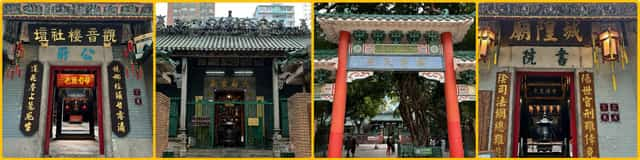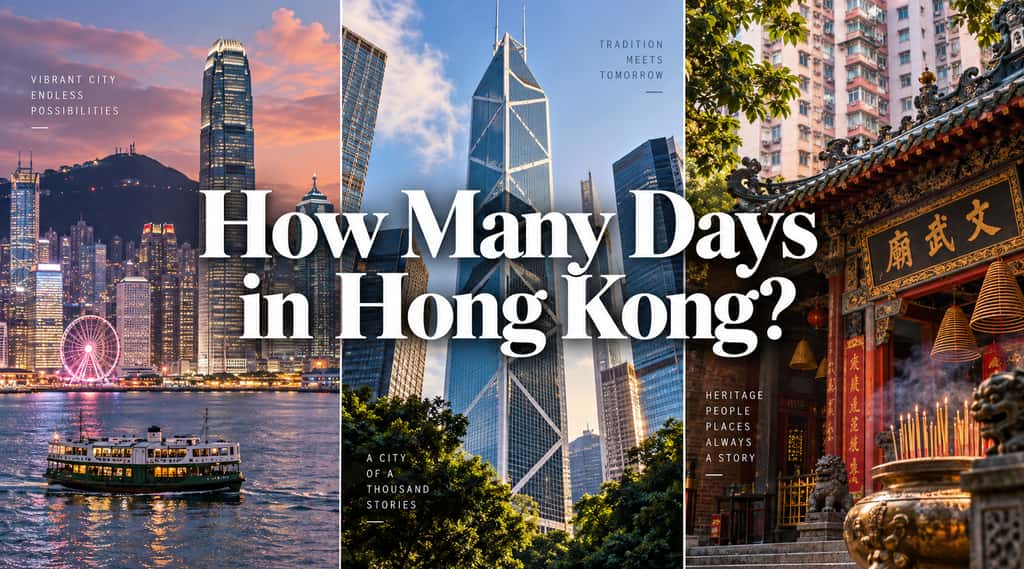
For most first-time visitors, 3 full days is ideal. Two days is enough for the essential Hong Kong city experience, while 4 days or more makes sense if you want to add Lantau Island, Disneyland, hiking or a slower family schedule.
That distinction matters because Hong Kong looks compact on a map, but attractions such as Tai O, Disneyland and the Big Buddha can consume most of a day once transport is included.
Best for most travellers: Stay 3 days. If you only have 48 hours, spend one day around Hong Kong Island and Victoria Harbour and one day exploring Kowloon. Do not try to squeeze Lantau Island into the same itinerary unless it is one of your top priorities.
How Many Days to Spend in Hong Kong: Quick Answer
| Time available | What you can realistically see | Our verdict |
|---|---|---|
| 1 day | Central, Victoria Harbour and one major viewpoint | Only for a stopover |
| 36 hours | Core skyline sights + one neighbourhood | Short but worthwhile |
| 2 days | Hong Kong Island + Kowloon essentials | Minimum we recommend |
| 3 days | Two city days + one major extra | Best for most first-timers |
| 4 days | Add Lantau, Disneyland, Ocean Park or a slower family day | Better for families |
| 5–7 days | Islands, hiking, neighbourhoods and possible Macau day trip | Best for a deeper trip |
The important question isn’t simply “how many days to travel in Hong Kong?”
It is what you want your extra day to achieve.
With 2 days, you can understand the city.
With 3, you can add one completely different side of Hong Kong.
From 4 days onward, you can stop making major trade-offs.
Is 2 Days in Hong Kong Enough?
Yes. Two full days in Hong Kong is enough for a first visit if you stay focused on the urban core.
A good two-day Hong Kong itinerary can cover:
- Central and Sheung Wan
- Victoria Peak
- Victoria Harbour
- The Star Ferry
- Tsim Sha Tsui
- Sham Shui Po or Mong Kok
- Local markets and food neighbourhoods
What does not fit comfortably is adding Disneyland, Ocean Park, Tai O, the Big Buddha and an outlying island on top.
If you still plan several paid attractions over a longer stay, check whether the Klook Pass Hong Kong saves money on them.
That is where many 48-hour itineraries go wrong: they optimize for the number of attraction names instead of the amount of Hong Kong you actually experience.
The Best Hong Kong 2-Day Itinerary
Two day include:
- Day 1: Hong Kong Island + Victoria Harbour
- Day 2: Kowloon neighbourhoods + local food
This minimizes long cross-city transfers and still gives you two very different versions of Hong Kong.
| Day | Main areas | What you get |
|---|---|---|
| Day 1 | Central → Sheung Wan → The Peak → Victoria Harbour | Skyline, heritage, vertical city |
| Day 2 | West Kowloon / Sham Shui Po → Mong Kok → Jordan | Markets, food, street life |
Morning: Central and Sheung Wan
Start your first morning in Central, but do not treat it simply as the business district.
The interesting part is the transition west.
Walk from modern Central towards the Mid-Levels Escalator, Hollywood Road and Sheung Wan. Within a relatively compact area, Hong Kong changes from office towers and luxury malls to older shopfronts, temples, galleries and steep residential streets.
The Central–Mid-Levels Escalator system runs downhill during the morning commute and uphill from 10 AM, so late morning is the more convenient direction for visitors exploring SoHo and the Mid-Levels.
What is actually worth stopping for?
For a short trip, choose one or two, not everything:
- Tai Kwun for architecture, heritage and contemporary culture
- PMQ if local design and independent shops interest you
- Man Mo Temple for a short heritage stop
- Hollywood Road for the walk itself
The purpose of this morning is not to collect attractions.
It is to see why Hong Kong works vertically: escalators, steep streets, elevated walkways, towers and older neighbourhoods compressed into the same few blocks.
2.5–3 hours including lunch.
Afternoon and Evening: Make the Skyline Your Main Event
For a first visit, Victoria Peak and Victoria Harbour deserve one of your two evenings.
The strongest sequence is:
Central → Peak Tram → Victoria Peak → descend to Central → Star Ferry → Tsim Sha Tsui
This lets you experience the same skyline from above, from the water and finally from Kowloon.
If you specifically want to time The Peak around sunset, choose the best viewpoint, decide between Peak Tram and Bus 15, and reach the Symphony of Lights efficiently, that is better treated as its own evening route rather than another section of a 2-day guide.
Should you pay for Sky Terrace 428?
Not automatically.
The paid deck is convenient if you want a high, unobstructed viewpoint without additional walking. But free public viewpoints around The Peak mean you do not need Sky Terrace solely to see the skyline.
That makes this more of a convenience upgrade than an essential admission fee.
Why we would not add Temple Street tonight
You could.
But after Central, The Peak, a harbour crossing and Tsim Sha Tsui, adding another market mainly makes the itinerary longer.
Save Kowloon street life for Day 2, when it becomes part of the route rather than another item squeezed onto the end of Day 1.
Day 2: See the Hong Kong That Short Itineraries Usually Rush Through
Day 2 should feel different from Day 1.
Instead of another viewpoint or famous landmark, spend most of the day at street level in Kowloon.
Morning Option 1: West Kowloon for Art and Architecture
Choose West Kowloon if museums, architecture and waterfront space interest you.
This works particularly well after a dense first day because the area feels much more open than Central or Mong Kok.
Do not automatically add a museum just because it appears on a list of things to do in Hong Kong. Large museums can easily consume several hours.
If M+ or the Hong Kong Palace Museum is a priority, make it the centre of the morning rather than trying to “fit it in.”
Morning Option 2: Sham Shui Po for Neighbourhood Hong Kong
For most travellers who prefer local street life to museums, we would choose Sham Shui Po instead.
This is one of the better areas for understanding Hong Kong without needing a specific paid attraction.
Walk between market streets, small shops and older residential blocks, then have an early lunch locally.
Apliu Street is particularly known for electronics and second-hand goods, but the stronger reason to visit Sham Shui Po is the neighbourhood as a whole rather than any single market.
Choose West Kowloon if: museums and architecture matter more. Choose Sham Shui Po if: food, markets and everyday street life matter more.
For a two-day city trip, do not try to do both properly.
Afternoon: Walk South Through Kowloon
Continue towards Mong Kok.
Mong Kok is worth visiting less because of one specific attraction and more because it shows Hong Kong at maximum street-level density.
Rather than creating a checklist of markets, walk through whichever streets interest you.
You can include:
- Tung Choi Street
- Fa Yuen Street
- Goldfish Market area
- Sneaker Street
- Nathan Road
If you are not interested in shopping, you do not need two hours at the Ladies' Market.
Spend that time eating, exploring side streets or simply continuing south.
This is an important itinerary principle throughout Hong Kong:
Markets are neighbourhood experiences, not compulsory attractions.
Evening: Finish in Jordan or Yau Ma Tei
End your two days around Jordan and Yau Ma Tei.
Temple Street becomes more interesting later in the day, making it a natural final stop rather than something you need to detour towards.
Eat dinner nearby and leave the evening flexible.
After two days, there is little value in crossing Victoria Harbour again solely because another guide tells you to finish in Lan Kwai Fong.
What Should Your Third Day in Hong Kong Be?
This is where a 3-day Hong Kong itinerary becomes much better than a 2-day itinerary.
Do not use Day 3 for more Central and Kowloon.
Use it to add something fundamentally different.
| Your priority | Best use of Day 3 |
|---|---|
| Big Buddha + scenery | Ngong Ping / Lantau |
| Disney fan | Hong Kong Disneyland |
| Rides + marine attractions | Ocean Park |
| Island atmosphere | Cheung Chau |
| Hiking | Dragon's Back or another trail |
| Slower city trip | Extra neighbourhoods + museums |
| Macau is a priority | Consider a dedicated Macau day |
This is why we consider three days the sweet spot.
Days 1 and 2 show you the city. Day 3 lets you choose which other side of Hong Kong matters to you.
Should Your Third Day Be Ngong Ping and Tai O?
Yes, if Lantau is one of your priorities — but treat it as a dedicated day.
Ngong Ping 360 itself takes roughly 25 minutes each way, and once you add Tung Chung transfers, the Big Buddha, Po Lin Monastery and potentially Tai O, it stops being a quick attraction.
That is exactly why we would not include Tai O in a standard 2-day Hong Kong itinerary.
Visitors combining the Big Buddha and Tai O also need to think about whether a one-way or round-trip cable car ticket makes more sense, because returning from Tai O directly towards Tung Chung can avoid unnecessary backtracking.
How Many Days in Hong Kong With Kids?
Four days is a better target for most families.
Adults travelling as a couple can move quickly between neighbourhoods and stay out late. Families often need more time for meals, breaks, queues and hotel returns.
More importantly, Hong Kong Disneyland and Ocean Park are each effectively full-day attractions.
Trying to combine several major attractions on consecutive days can make a technically possible itinerary unpleasant.
A more sensible four-day family structure is:
- Day 1: Easy city sightseeing
- Day 2: One theme park
- Day 3: Lantau or another major excursion
- Day 4: Shopping and a slower departure day
That is fundamentally different from the faster two-day itinerary above.
What About Hong Kong in a Day?
If you only have one day in Hong Kong, do not cut this 2-day itinerary in half randomly.
Prioritize one continuous route:
Central → Victoria Peak → Central waterfront → Star Ferry → Tsim Sha Tsui
This gives you the strongest visual introduction to Hong Kong with minimal backtracking.
Skip Lantau, Mong Kok and distant attractions.
If you arrive late morning or afternoon, focus even more aggressively on the Peak and Victoria Harbour.
What About 36 Hours in Hong Kong?
With 36 hours in Hong Kong, use the one-day route above and add one neighbourhood block the following morning.
Choose:
- Central / Sheung Wan if you missed it on arrival
- Sham Shui Po for food and street life
- Mong Kok for markets
- West Kowloon for a museum
Do not start a Lantau excursion unless your flight timing gives you a genuinely large buffer.
Is 4 or 5 Days Too Long in Hong Kong?
No. But the value of each extra day changes.
The first two days are about the city itself.
Days 3–5 are where Hong Kong becomes less obviously urban:
- Lantau Island
- Outlying islands
- Hiking
- Beaches
- Theme parks
- Museums
- Macau
That is why someone interested only in famous city sights may be satisfied after two or three days, while someone interested in Hong Kong beyond the skyline can easily fill five.
How Long to Spend in Hong Kong: Our Verdict
If this is your first trip:
1 day: worthwhile stopover 2 days: enough for the essentials 3 days: best choice for most travellers 4 days: best if travelling with children or adding a major attraction 5–7 days: worthwhile if you want islands, hiking, theme parks or Macau
If you are deciding between two days and three days, choose three whenever your schedule allows.
The extra day is disproportionately valuable because it means you do not have to choose between seeing Hong Kong's urban core properly and leaving it for Lantau, an island or a major attraction.
FAQ
How many days do you need in Hong Kong?
Three full days is ideal for most first-time visitors. Two days covers the essential city sights, while three lets you add Lantau, a theme park, hiking or another major experience without rushing.
Is 2 days in Hong Kong enough?
Yes. Two days is enough to explore Central, Victoria Peak, Victoria Harbour and key Kowloon neighbourhoods. It is not enough to comfortably add several full-day attractions.
What should I do in Hong Kong for 2 days?
Spend one day around Hong Kong Island and Victoria Harbour, then spend the second exploring Kowloon. This creates more variety and reduces unnecessary travel.
What should I see in Hong Kong in one day?
Prioritize Central, Victoria Peak, the Star Ferry and Tsim Sha Tsui. These attractions form a logical route and deliver the strongest first-time introduction to the city.
Should I spend 2 or 3 days in Hong Kong?
Choose 3 days if you can. The first two days cover the city; the third gives you enough time for Lantau, Disneyland, Ocean Park, hiking or an outlying island.
Is a Hong Kong itinerary of 7 days too long?
No. Seven days makes sense if your trip includes hiking, islands, theme parks or Macau. If you only want the central city sights, however, you probably do not need a full week.
Can I visit the Big Buddha during a 2-day Hong Kong trip?
You can, but it is usually a poor use of limited time unless the Big Buddha is one of your top priorities. Treat Lantau as a replacement for one city day rather than an extra attraction squeezed between Central and Kowloon.
How many days should a family spend in Hong Kong?
Around four days is a better starting point. Theme parks take most of a day, and families generally benefit from a slower schedule than adults on a short city break.
Prices, schedules and operating conditions can change. Check current attraction and transport details before booking.
Written by

Former KLOOK Recommender System Expert
Built the systems that decided which products ranked first for users in KLOOK. That experience taught me that rankings just optimize clicks and conversions for OTA — not necessarily what truly fits each traveler. Today, I write evidence-based verdicts using my 4 year experience on product: whether they're worth it, who they suit, and when you're better off skipping them.