Updated: November 2026
There are three ways to see sumo in Tokyo, and your travel dates choose for you. Real tournament bouts happen in Tokyo only in January, May and September, at Ryogoku Kokugikan. Morning practice happens at the stables between tournaments, on fewer days than you might expect. Apart from Arashio stable's free street window, the only bookable way we found is a tour, from about US$75. A sumo show, run by retired wrestlers, runs on its own schedule from about US$30. Shows dominate what you can book: only 13 of the 152 results in our Tour Explorer search have practice or a stable in the title.
Best for most travellers: if you are in Tokyo from 10 to 24 January 2027, buy an official 2F chair seat for the tournament: chair C costs ¥5,000 (about US$31) on a weekday, plus a ¥2,000 fee on the English ticket site. Outside the tournament, book a guided practice visit such as Klook's Ryogoku morning practice tour with a sumo journalist, from about US$108. The catch: you meet at 7:25 or 8:15, sit still and silent, and practice can be cancelled at short notice.
What matters before you book
- Your dates decide which kind of sumo you can see. The 2027 Tokyo tournaments run 10–24 January, 9–23 May and 12–26 September at Ryogoku Kokugikan (Japan Sumo Association, checked 23 November 2026). Outside those 45 days there are no real bouts in Tokyo.
- Practice days are fewer than they look. Arashio stable's calendar, for example, shows no practice during tournaments, a rest week after each one, and no Tokyo practice around the Osaka, Nagoya and Fukuoka tournaments, when the stable moves away (in 2026 it trained in Sakai, near Osaka, from late February). The sumo association publishes no common schedule, so check the stable's or tour's own calendar for your dates.
- Late November to mid-December is the thinnest window. The senior wrestlers are on the winter regional tour from 29 November to 16 December, then in Okinawa on 19–20 December (Japan Sumo Association). Arashio says it has no Tokyo practice until December and hasn't posted its December days yet. If your trip falls here, a sumo show is the dependable option.
- Tournament tickets cost less than tours but are harder to buy. A 2F chair B seat is ¥6,000–8,000 (about US$38–50) from January 2027. The English ticket site adds ¥2,000 per ticket, limits you to two, prints them only at 7-Eleven in Japan, and allows no changes or refunds. Viator's B-seat tour below costs about US$110 and can be cancelled free up to 24 hours ahead.
- Practice tours carry a cancellation risk that shows don't. Practice follows the stable's schedule, and the tours say it can change without notice. In April 2026 Gendai Business reported that the sumo association had asked stables to stop practice tours run with travel agencies; the association declined to comment, and the tours are still on sale. Check the refund terms if practice is cancelled.
Quick answer: which kind of sumo should you book?
During a Tokyo tournament, go to the tournament. Otherwise, choose practice if you want the real training and can get up early, and a show if you need a fixed date or are travelling with young children.
| Option | Best for | Price (23 Nov 2026) | When | Main catch |
|---|---|---|---|---|
| Official tournament ticket, 2F chair seat | Anyone in Tokyo in January, May or September | ¥5,000–13,000 (about US$31–82) + ¥2,000 fee online | Tournament days | Non-refundable; 2 per person; print at 7-Eleven |
| Tournament B seat with a 90-minute guide | First-timers who want the rules explained | from about US$110 | Tournament days | Guide leaves about 15:00 |
| Morning practice in Ryogoku with a sumo journalist | Most visitors outside tournaments | from about US$108 | Practice mornings | Silence for 1–2 hours |
| Practice with a chair seat | Travellers who can't sit on the floor | from about US$101 | Practice mornings | Stable not named before booking |
| Guided walk with practice through Arashio's window | Context on the free option | from about US$95 | Arashio practice days | The viewing is free without the tour |
| Sumo show with lunch, Dosukoi Tanaka | Families and a fixed booking | from about US$95 | Show schedule | A show, not competition |
| Sumo show in Shinjuku | A low-cost show in central Tokyo | from about US$43 (sale; US$50 regular) | Show schedule | Only six guests per show wrestle, by lottery |
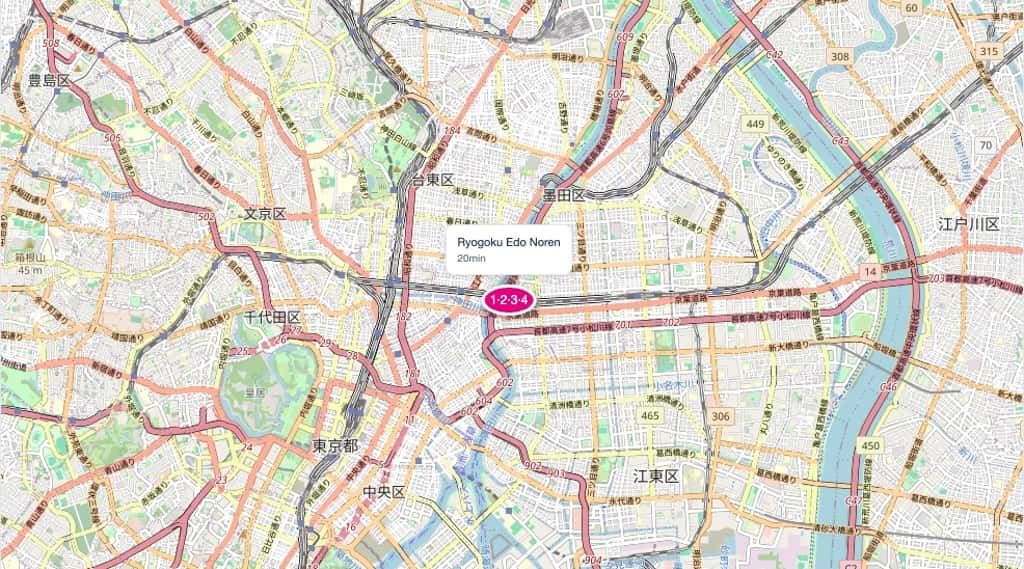
Prices are the listed "from" prices on 23 November 2026 for one adult and the default package: Klook in US dollars; Viator and GetYourGuide show "from" prices only. Official prices are in yen; USD conversions use ¥159 to US$1 and are approximate, and exchange rates can change. The map below shows prices captured earlier in November, so some differ.
Compare the six tours on the map
Tournament vs morning practice vs sumo show
The tournament is the real competition; practice is the real training; a show is an explanation. At the tournament, ranked wrestlers fight for their record, and the top division starts around 2 pm (Ticket Oosumo). At practice you watch wrestlers repeat bouts and drills at close range, with no commentary unless a guide adds it quietly. At a show, retired wrestlers demonstrate techniques, explain the rules in English and invite a few guests into the ring; GetYourGuide's Shinjuku listing says plainly, "This is not a real tournament".
Choose a show only if your dates rule out the other two, or if your children won't sit silently for an hour.
Option 1: Buy an official tournament ticket
If your dates match, this is the best value in Tokyo sumo. Advance tickets for 10–24 January 2027 go on sale on 5 December 2026 at 10:00 JST on Ticket Oosumo (Japan Sumo Association).
| 2F chair seat (Jan 2027) | Weekday | Weekend/holiday | Day 14 and final day |
|---|---|---|---|
| Chair S (rows 1–3) | ¥11,000 | ¥12,000 | ¥13,000 |
| Chair B (rows 7–11) | ¥6,000 | ¥7,000 | ¥8,000 |
| Chair C (rows 12–13) | ¥5,000 | ¥6,000 | ¥7,000 |
| Chair D (back row; Japanese Ticket Oosumo only, not the English site) | ¥3,000 | ¥3,000 | ¥3,000 |
A four-person floor box C costs ¥38,000 on a weekday, about US$60 each when four share it. Same-day tickets are sold at the Kokugikan box office only if the day isn't sold out. The catch: the English site's ¥2,000 fee per ticket, two tickets per person, 7-Eleven printing in Japan, and no changes or cancellations.
Option 2: Book a tournament seat through a tour
Best for first-timers who want the rules explained. Viator's B-seat tour, from about US$110, includes a 2F chair B ticket, a short Ryogoku walk and the Sumo Museum, with free cancellation up to 24 hours ahead. The catch: it costs about US$45–60 more than the official B seat plus fee, and the guide leaves around 15:00 while bouts run to about 18:00.
Option 3: Watch morning practice with a sumo journalist
Best for most visitors outside tournament dates. Klook's Ryogoku tour, from about US$108, meets at Ryogoku station: front row from 7:25 or back row from 8:15. You watch for roughly one to two hours, then question the journalist. Ages 4 and up; free cancellation 24 hours ahead.
The catch: the listing doesn't say which stable you visit (its itinerary only says Ryōgoku Kokugikan); shoes off, floor cushion or chair, no calls, and rule-breakers may be removed without a refund.
Option 4: Practice with a chair seat
Best for travellers with bad knees or backs. Viator's chair-seat practice tour, from about US$101, meets at Kiyosumi-shirakawa station and seats you on chairs for about 1 hour 40 minutes of practice, followed by time with the wrestlers and a short history talk. The catch: the listing doesn't name the stable.
Option 5: Watch Arashio stable through the window
Free, and the right choice if you are flexible and early. Arashio stable, three minutes from Hamacho station, lets anyone watch from the street through its windows from about 7:30 to 9:00, with no booking, on the days its online calendar lists; it won't answer schedule questions by phone or email (Arashio stable website, checked 23 November 2026). Keep quiet, no flash, no food or drink.
GetYourGuide's guided walk, from about US$95, adds a guide and a neighbourhood walk; it views from outside too, and refunds in full if practice doesn't happen.
Option 6: Book a sumo show
Best for families, short trips and the late-November gap. Klook's show with lunch at Dosukoi Tanaka, from about US$95 near Kikukawa station, includes lunch and an English-speaking host, with free cancellation up to 48 hours ahead. GetYourGuide's Shinjuku show costs from about US$43 on sale (US$50 regular). The catch: neither is competition, and in Shinjuku only six guests per show wrestle, by lottery.
Common mistakes
- Booking a "sumo experience" expecting real practice. Most titles with "experience" are shows. Look for "morning practice" or "stable" and an early start.
- Planning practice in a tournament week. At Arashio, for example, there is none during the 15 days and none the week after; check the calendar of the stable or tour you book.
- Going to the Sumo Museum on a weekend. The museum at Ryogoku Kokugikan is free but closed on weekends and holidays; on tournament days you need that day's ticket. It is closed from 18 to 31 December 2026 (Japan Sumo Association).
- Arriving after 2 pm expecting a full day. Tickets cover bouts from the morning; the top division starts around 2 pm, and re-entry is allowed once, before 17:00 (Ticket Oosumo).
Final verdict
For most travellers in Tokyo between 10 and 24 January, 9 and 23 May or 12 and 26 September 2027, buy an official chair seat and arrive by mid-afternoon. On other dates, book the Ryogoku morning practice tour with a sumo journalist if you can be at Ryogoku by 7:25 or 8:15. Choose the free Arashio window if your schedule is flexible, and a sumo show when you need a fixed date or have young children.
FAQ
Can women watch sumo morning practice?
Yes. Arashio stable says visitors of any gender can watch (Arashio stable website).
Is there sumo practice in Tokyo in December?
Some, but check before you plan around it. The senior wrestlers are on the regional tour from 29 November to 16 December. In December 2025 Arashio posted practice days from 6 to 25 December; its December 2026 days weren't posted on 23 November.
Are there sumo tournaments outside Tokyo?
Yes: Osaka (14–28 March 2027), Nagoya (11–25 July) and Fukuoka (14–28 November).
How we compared these tours
We searched Tour Explorer for "sumo", "sumo practice", "sumo morning practice", "sumo stable", "sumo training" and "keiko" on 23 November 2026 and found 152 results (86 GetYourGuide, 58 Viator, 8 Klook), including Osaka, Kyoto and a few non-sumo tours; we classified them by title only. We read 17 in full and rechecked the chosen products' prices on Klook, Viator and GetYourGuide the same day. Explorer prices were captured from 29 October to 15 November 2026; prices above are the default package's "from" price. Results from the three sites aren't matched, so one tour can appear more than once. We didn't analyse or rank review text. Official sources, all checked on 23 November 2026: the Japan Sumo Association's 2027 schedule, January 2027 ticket and price pages, Sumo Museum calendar and 2026 winter tour schedule; Ticket Oosumo English; Arashio stable's visitor page and calendar. The April 2026 report on stable tours is from Gendai Business.
Written by
Former KLOOK Recommender System Expert
Built the systems that decided which products ranked first for users in KLOOK. That experience taught me that rankings just optimize clicks and conversions for OTA — not necessarily what truly fits each traveler. Today, I write evidence-based verdicts using my 4 year experience on product: whether they're worth it, who they suit, and when you're better off skipping them.