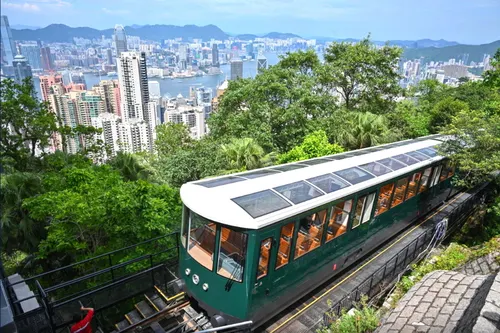
Hong Kong Peak Tram Dim Sum Tour: 5 Essential Yum Cha Restaurants
Dim sum is not simply a list of dumplings to try in Hong Kong. It is a complete social ritual involving hot tea, bamboo steamers, shared tables and dishes designed for everyone to taste together.
This guide focuses on five distinctive Hong Kong dim sum restaurants, ranging from inexpensive neighbourhood dining rooms to historic tea houses. It explains where to go, what to order, how much to budget and what international visitors should expect.
The Peak Tram is included only as an optional sightseeing addition. The food remains the main event in this Hong Kong Peak Tram dim sum tour.
Quick Answer: Which Hong Kong Dim Sum Restaurant Should You Choose?
| Restaurant | Best for | Area | Approximate budget |
|---|---|---|---|
| Tim Ho Wan | Easy and affordable first experience | Central or Sham Shui Po | HK$80–160 |
| One Dim Sum | Budget-friendly Kowloon meal | Prince Edward | HK$70–150 |
| Sun Hing Restaurant | Early-morning local experience | Kennedy Town | HK$60–130 |
| Luk Yu Tea House | Traditional atmosphere with table service | Central | HK$180–350 |
| Lin Heung Lau | Heritage trolley-style yum cha | Sheung Wan | HK$100–220 |
Our Recommendations
- Best for first-time visitors: Tim Ho Wan
- Best for traditional atmosphere: Luk Yu Tea House
- Best heritage experience: Lin Heung Lau
- Best for early risers: Sun Hing Restaurant
- Best budget option in Kowloon: One Dim Sum
This ranking is based on the visitor experience, atmosphere, value and ease of access. It is not intended as a definitive judgment of food quality.
What Is Dim Sum?
Dim sum refers to small Cantonese dishes traditionally eaten during yum cha, which literally means “drinking tea.”
A typical meal may include:
- Steamed shrimp dumplings
- Pork and shrimp siu mai
- Barbecue pork buns
- Rice-noodle rolls
- Turnip cake
- Chicken feet
- Steamed pork ribs
- Custard buns
- Sticky rice wrapped in lotus leaf
- Deep-fried dumplings
Most dishes are served in small portions designed for sharing. A basket usually contains two to four pieces.
For two people, five or six dishes are normally enough for a substantial breakfast or lunch.
Number 5: Tim Ho Wan
Best for: First-time visitors and affordable classics Recommended branch: Central or Sham Shui Po Estimated budget: HK$80–160 per person Ordering style: Paper menu or order sheet
Tim Ho Wan is one of the most approachable places to begin exploring Hong Kong dim sum.
The restaurant started as a small establishment in Mong Kok in 2009 and later became internationally recognised for serving high-quality dim sum at relatively accessible prices. The brand received Michelin-star recognition in Hong Kong from 2010 to 2021.
Today, it operates multiple Hong Kong locations, including Central, Sham Shui Po, West Kowloon Station, Tsim Sha Tsui and several residential districts.
Central or Sham Shui Po?
Choose the Central branch when you:
- Are staying on Hong Kong Island
- Want to combine dim sum with the Peak Tram
- Need convenient MTR or Airport Express connections
- Prefer an easy route with minimal planning
Choose the Sham Shui Po branch when you:
- Want a more neighbourhood-focused experience
- Plan to explore local markets
- Are staying in Kowloon
- Do not mind travelling farther from the main tourist districts
What to Order at Tim Ho Wan
Baked Barbecue Pork Buns
Tim Ho Wan’s signature dish has a sweet, crumbly crust surrounding a savoury char siu filling.
The contrast between the slightly crisp exterior and sticky pork filling makes it different from a conventional steamed barbecue pork bun.
Har Gow
These steamed shrimp dumplings should have a delicate translucent wrapper and a firm, springy filling.
Siu Mai
The classic version combines pork and shrimp in an open-topped yellow wrapper.
Pan-Fried Turnip Cake
Turnip cake is made with shredded radish and rice flour before being sliced and pan-fried. The exterior should be lightly crisp while the centre remains soft.
Rice-Noodle Rolls
Choose a filling such as shrimp, barbecue pork or beef. The rolls are usually served with a light sweet soy sauce.
Is Tim Ho Wan Still a Michelin-Starred Restaurant?
Tim Ho Wan became famous through its Michelin-star history, but visitors should not assume that every current branch holds a Michelin star.
It is more accurate to describe it as an internationally recognised Hong Kong dim sum brand with a history of Michelin awards.
Who Should Choose Tim Ho Wan?
Tim Ho Wan is a strong choice when you want:
- Familiar dim sum classics
- Moderate prices
- A structured ordering process
- Several convenient locations
- An easy first yum cha experience
Number 4: One Dim Sum
Best for: Affordable dim sum in Kowloon Recommended branch: Prince Edward Address: G/F, 209A–209B Tung Choi Street, Prince Edward Estimated budget: HK$70–150 per person Ordering style: Menu or order sheet
One Dim Sum is a casual restaurant known for serving freshly prepared Cantonese dim sum at accessible prices.
Its Prince Edward location is convenient for travellers exploring Mong Kok, the Flower Market, Goldfish Market or Sham Shui Po.
The dining room is compact, and queues are common around lunch. Arriving in the late morning usually provides a smoother experience.
What to Order at One Dim Sum
Har Gow
A useful test of any dim sum restaurant is the shrimp dumpling. Look for a wrapper that is thin without falling apart and shrimp that remains firm rather than overcooked.
Pork Siu Mai
One Dim Sum’s siu mai is a dependable choice for visitors who want to compare one of Hong Kong’s most recognisable dim sum dishes.
Steamed Custard Buns
The soft white bun contains a rich egg-custard filling. Eat carefully because the centre may be extremely hot.
Barbecue Pork Rice-Noodle Rolls
This dish combines silky rice sheets with sweet and savoury char siu.
Deep-Fried Taro Dumplings
The crisp, web-like exterior surrounds a soft taro layer and savoury filling.
How to Combine One Dim Sum with a Kowloon Food Day
A practical route is:
One Dim Sum → Flower Market Road → Goldfish Market → Mong Kok → Temple Street
This creates a food-and-neighbourhood itinerary without requiring additional sightseeing on Hong Kong Island.
Who Should Choose One Dim Sum?
Choose One Dim Sum when:
- Price is important
- You are staying in Kowloon
- You plan to visit Mong Kok
- You prefer a casual dining room
- You want several classic dishes in one meal
Number 3: Sun Hing Restaurant
Best for: Early risers, night owls and local atmosphere Address: Shop C, G/F, 8 Smithfield Road, Kennedy Town Typical hours: Approximately 3:00 AM–4:00 PM Estimated budget: HK$60–130 per person Ordering style: Fresh dishes offered as they leave the kitchen
Sun Hing Restaurant is one of Hong Kong’s most distinctive dim sum experiences because it opens in the middle of the night.
It attracts night-shift workers, neighbourhood residents, early risers and jet-lagged travellers looking for freshly steamed food before sunrise.
Instead of choosing everything from a fixed menu, diners may be offered dishes as soon as each batch leaves the steamer.
What to Order at Sun Hing
Salted-Egg Custard Buns
These buns contain a rich mixture of salted egg yolk, butter and sugar.
Break one open carefully. The centre can be hot and fluid.
Crab-Roe Siu Mai
The addition of roe gives the siu mai a deeper seafood flavour and a richer appearance.
Har Gow
Freshly steamed shrimp dumplings are an essential order, especially when a new batch arrives directly from the kitchen.
Fried Milk
This dish has a crisp coating around a soft, creamy centre. It offers a different texture from the restaurant’s steamed items.
Curry Tripe
For more adventurous diners, curry tripe provides a stronger, spiced alternative to delicate shrimp dumplings and buns.
What Is the Dining Experience Like?
Sun Hing is not polished or designed primarily for tourists.
Expect:
- Shared tables during busy periods
- Fast service
- Limited space
- Dishes arriving in no particular order
- A lively local atmosphere
- Less English than at major restaurant chains
Pointing at food is normal. You do not need to understand every dish before accepting it.
Best Time to Visit
There is rarely a practical reason for most travellers to arrive at exactly 3:00 AM.
A more comfortable visit is usually between 6:00 AM and 9:00 AM, when the restaurant still feels local but is easier to include in a sightseeing day.
Who Should Choose Sun Hing?
Choose Sun Hing when:
- You are awake early because of jet lag
- You want a local neighbourhood experience
- You are comfortable with informal service
- You enjoy trying unfamiliar dishes
- You want to eat before the main tourist attractions open
Number 2: Luk Yu Tea House
Best for: Historic atmosphere and traditional table service Address: 24–26 Stanley Street, Central Estimated budget: HK$180–350 per person Ordering style: Traditional table service
Luk Yu Tea House offers a more formal and comfortable version of traditional yum cha.
The restaurant is known for its dark wood, Chinese artwork, old-fashioned furniture and subtle colonial-era details. It attracts both long-time customers and visitors interested in historic Hong Kong dining culture.
Unlike a crowded neighbourhood dim sum shop, Luk Yu feels more like a traditional Cantonese restaurant. Service is structured, and the environment is usually easier for international visitors to navigate.
What to Order at Luk Yu Tea House
Har Gow and Siu Mai
Begin with the fundamental steamed dishes before adding richer fried or baked items.
Pork Liver Siu Mai
This traditional variation has a stronger flavour and softer texture than conventional pork-and-shrimp siu mai.
It may not appeal to every visitor, but it provides an opportunity to try a less common old-school dish.
Steamed Beef Balls
Cantonese beef balls are usually softer and lighter than Western-style meatballs, often flavoured with dried citrus peel.
Barbecue Pork Buns
Order these when you want to compare a traditional steamed bun with Tim Ho Wan’s baked version.
Seasonal Soup
Luk Yu is a full Cantonese restaurant rather than only a dim sum shop. Ask whether a seasonal soup or daily speciality is available.
Tea Matters Here
At Luk Yu, tea is an important part of the experience rather than an afterthought.
Common choices include:
- Pu’er: Dark, earthy and useful with rich dishes
- Jasmine: Floral and relatively light
- Shoumei: Mild white tea with a gentle flavour
- Tieguanyin: Fragrant oolong tea
Pu’er is a dependable choice when ordering fried dishes, pork or rich buns.
Is Luk Yu Expensive?
Luk Yu costs more than Tim Ho Wan, Sun Hing or One Dim Sum.
You are paying for:
- Its Central location
- Traditional service
- The historic dining room
- A broader Cantonese menu
- A calmer introduction to yum cha
Who Should Choose Luk Yu?
Choose Luk Yu when:
- Atmosphere is a priority
- You are staying in Central
- You prefer table service
- You are dining with parents or older relatives
- You want a more comfortable heritage experience
Number 1: Lin Heung Lau
Best for: Old-school trolley-style yum cha Current address: G/F–2/F, Tung Ning Building, 249–253 Des Voeux Road Central, Sheung Wan Nearest MTR: Sheung Wan Station, Exit B Estimated budget: HK$100–220 per person Ordering style: Trolleys and kitchen orders
Lin Heung Lau is one of the most recognisable names associated with traditional Hong Kong tea-house culture.
In 2026, the restaurant moved from its former Wellington Street location to Tung Ning Building in Sheung Wan. Older online guides may still show the previous address.
The newer venue retains important elements of the historic experience, including traditional furniture, tea utensils and dim sum trolleys.
Why Lin Heung Lau Ranks First
Lin Heung Lau is not necessarily the easiest or quietest restaurant on this list.
It ranks first because it offers the most memorable cultural experience for travellers who want to understand what old-style Hong Kong yum cha feels like.
Expect:
- A busy dining room
- Shared tables
- Servers moving quickly
- Bamboo steamers on trolleys
- Traditional dishes that may not appear in modern chains
- A certain amount of confusion
The experience is part meal and part living cultural performance.
What to Order at Lin Heung Lau
Traditional Siu Mai
Look beyond modern shrimp-heavy versions. Old-style siu mai may include pork, liver, mushroom or other traditional ingredients.
Steamed Pork Ribs
The ribs are usually cut into small pieces and steamed with black beans, garlic or chilli.
Beef Balls
Their soft, springy texture is produced through careful mixing rather than a coarse minced-meat preparation.
Chicken Feet
Chicken feet are commonly braised and steamed with black-bean sauce. They are soft, savoury and gelatinous.
Sticky Rice in Lotus Leaf
Sticky rice is steamed with meat, mushrooms and other fillings inside a fragrant lotus leaf.
Steamed Cakes
Traditional steamed cakes are worth ordering when available, particularly if you have already tried the more familiar dumplings.
How Dim Sum Trolleys Work
The trolley system can be confusing for first-time visitors.
Follow these steps:
- Find a seat or wait for a staff member to assign one.
- Order a pot of tea.
- Watch for trolleys carrying bamboo steamers.
- Approach the trolley or signal to the server.
- Ask to see what is inside.
- Point to the dishes you want.
- Allow the server to mark your order card.
- Keep the card until you pay.
Popular dishes may disappear quickly. Do not wait for the perfect trolley before ordering anything.
Who Should Choose Lin Heung Lau?
Choose Lin Heung Lau when:
- You actively want a traditional experience
- You are comfortable sharing tables
- Noise and fast service do not bother you
- You are interested in dishes beyond har gow
- You want to explore Sheung Wan afterward
How Much Dim Sum Should You Order?
For two people, start with five dishes:
- One basket of har gow
- One basket of siu mai
- One bun or steamed cake
- One rice-noodle roll
- One fried or pan-fried dish
Add another dish only after seeing the portion sizes.
For four people, seven to nine dishes usually provide enough variety without creating excessive leftovers.
Essential Dim Sum Vocabulary
| English | Cantonese name |
|---|---|
| Shrimp dumplings | Har gow |
| Pork and shrimp dumplings | Siu mai |
| Barbecue pork bun | Char siu bao |
| Rice-noodle roll | Cheung fun |
| Turnip cake | Lo bak go |
| Custard bun | Lai wong bao |
| Chicken feet | Fung zau |
| Sticky rice in lotus leaf | Lo mai gai |
| Steamed pork ribs | Pai gwat |
| Beef balls | Ngau yuk kau |
You do not need to pronounce every Cantonese name correctly. Showing a photograph or pointing at a dish is completely acceptable.
Yum Cha Etiquette for International Visitors
Expect a Tea Charge
Many restaurants charge each diner for tea, even when everyone shares one pot.
This may appear separately on the bill.
Tap Two Fingers to Say Thank You
When another person pours tea for you, lightly tap two fingers on the table.
This is a traditional gesture of thanks.
Lift the Lid When the Teapot Is Empty
Resting the teapot lid at an angle can signal that you need more hot water.
Shared Tables Are Normal
At busy traditional restaurants, solo travellers and small groups may be seated with strangers.
You are not expected to share food with them.
Eat Dishes as They Arrive
Dim sum does not always arrive together.
Begin eating steamed and fried dishes immediately instead of waiting for the full order.
Check Ingredients Carefully
Dim sum may contain:
- Pork
- Lard
- Shrimp
- Shellfish
- Oyster sauce
- Egg
- Peanuts
- Sesame
Vegetable-looking dishes may still contain meat stock, dried shrimp or oyster sauce.
Communicate serious allergies before ordering.
How to Avoid Long Dim Sum Queues
Popular dim sum restaurants are busiest during weekend brunch and lunch.
For shorter waits:
- Visit on a weekday
- Arrive between 9:30 AM and 11:00 AM
- Avoid public holidays
- Eat before the main 12:00–1:30 PM lunch period
- Keep a backup restaurant saved nearby
- Avoid taking a large group without a reservation
Sun Hing is an exception because its early schedule creates a different crowd pattern.
Adding the Peak Tram Without Letting It Take Over the Day
The Peak Tram can be added before dim sum, but it does not need to dominate the itinerary.
For the most efficient Hong Kong Peak Tram dim sum tour, choose a restaurant in Central or Sheung Wan.
Simple Peak Tram and Dim Sum Schedule
| Time | Activity |
|---|---|
| 7:30 AM | Take the Peak Tram from Central |
| 8:00 AM | Spend 45–60 minutes at Victoria Peak |
| 9:15 AM | Return to Central |
| 10:00 AM | Eat dim sum |
| 11:30 AM | Explore Central or Sheung Wan |
Choose Luk Yu Tea House for the shortest walking route after the tram.
Choose Lin Heung Lau when you want to continue into Sheung Wan.
Choose Tim Ho Wan Central when convenience and price matter most.
A Better Option for Serious Food Travellers
Travellers primarily interested in dim sum may prefer to eat first and treat the Peak Tram as an optional afternoon activity.
This prevents:
- Tram queues from delaying the meal
- Popular dishes selling out
- Arriving during the lunch rush
- Hunger affecting the sightseeing experience
The Peak Tram is a useful addition, not the reason to choose a dim sum restaurant.
Frequently Asked Questions
What is the best dim sum restaurant in Hong Kong for first-time visitors?
Tim Ho Wan is the easiest affordable option, while Luk Yu Tea House offers a more traditional and comfortable atmosphere.
Choose Lin Heung Lau when cultural experience matters more than convenience.
Where can I experience dim sum trolleys in Hong Kong?
Lin Heung Lau in Sheung Wan is the strongest option on this list for a traditional trolley-style yum cha experience.
Service formats can change, so confirm current arrangements before visiting.
What is the cheapest restaurant in this guide?
Sun Hing, One Dim Sum and Tim Ho Wan are generally the most affordable choices.
Expect to spend approximately HK$60–160 per person, depending on how many dishes you order.
Can I eat dim sum alone?
Yes. Solo dining is normal in Hong Kong.
Traditional restaurants may place you at a shared table, while modern restaurants are more likely to provide a separate small table when available.
What time should I eat dim sum?
Dim sum is traditionally associated with breakfast, brunch and lunch.
For travellers, approximately 9:30–11:00 AM is often the best balance between dish availability and shorter queues.
Do I need a reservation?
Reservations are useful at Luk Yu Tea House and for larger groups.
Tim Ho Wan, One Dim Sum and Sun Hing generally rely more heavily on walk-in customers and queues.
Is dim sum suitable for vegetarians?
Vegetarian options exist, but they may be limited in traditional restaurants.
Some apparently vegetarian dishes contain pork fat, meat stock, dried shrimp or oyster sauce. Ask explicitly before ordering.
Should I visit the Peak Tram before or after dim sum?
Visit the Peak Tram first when you want cooler weather and smaller early-morning crowds.
Eat dim sum first when food is your main priority or when you want the widest possible choice of dishes.
Can I complete a Hong Kong Peak Tram dim sum tour in half a day?
Yes. A short Peak visit followed by dim sum in Central or Sheung Wan normally takes four to five hours.
Final Recommendation
For an easy first experience, choose Tim Ho Wan and order baked barbecue pork buns, har gow, siu mai and turnip cake.
For a more comfortable heritage meal, choose Luk Yu Tea House.
For the most memorable old-school yum cha atmosphere, choose Lin Heung Lau and embrace the noise, shared tables and trolley service.
Early risers should consider Sun Hing Restaurant, while visitors exploring Kowloon can build a neighbourhood food day around One Dim Sum.
The best Hong Kong Peak Tram dim sum tour should be planned around the food—not the other way around. Choose the dim sum experience you want first, then add the Peak Tram only when it fits naturally into your day.